


K3s vs Kubernetes: When Should You Use K3s or K8s?
Compare K3s and Kubernetes across architecture, resources, HA, security, storage, GitOps, and cost to choose the right platform.

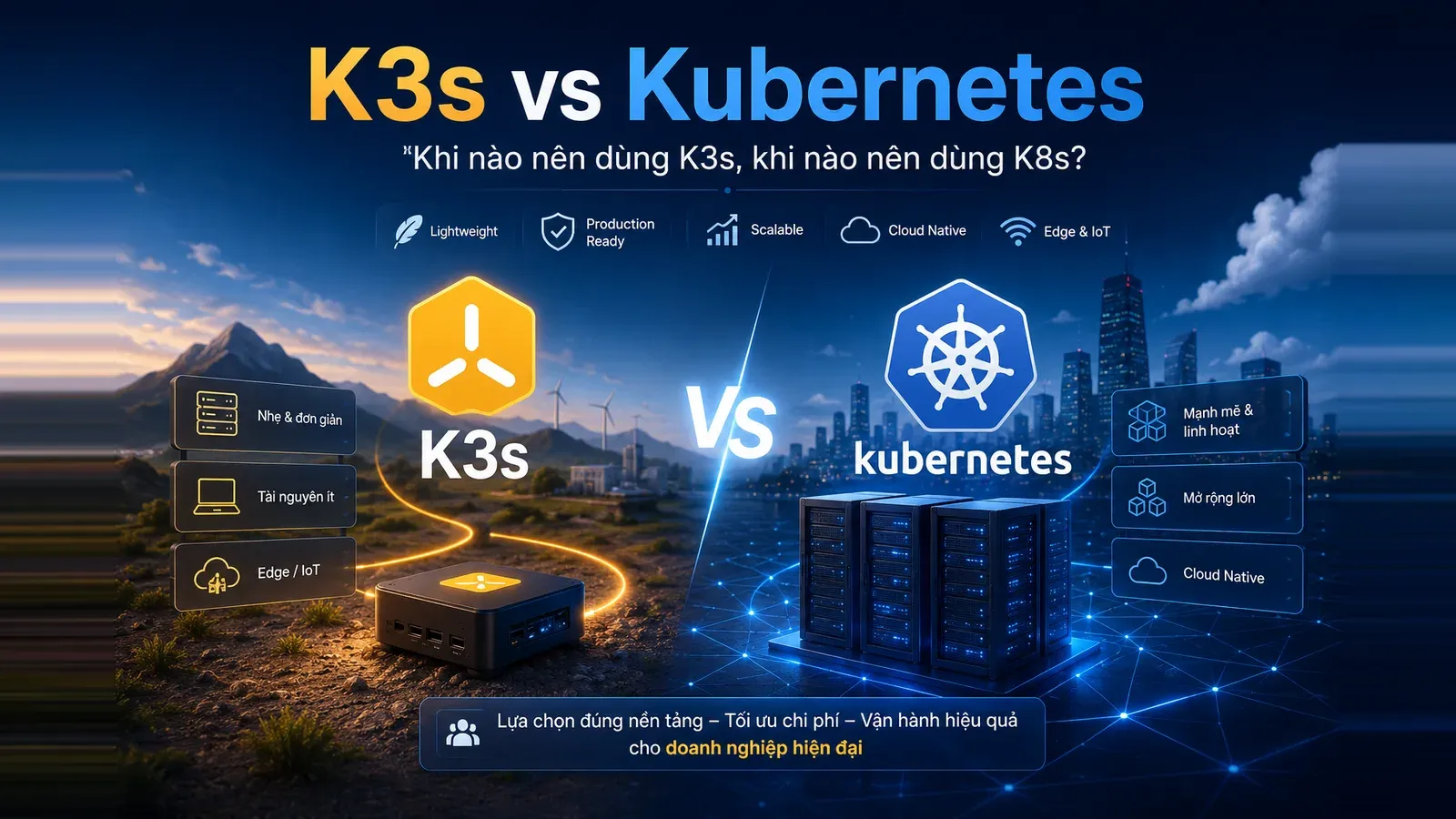
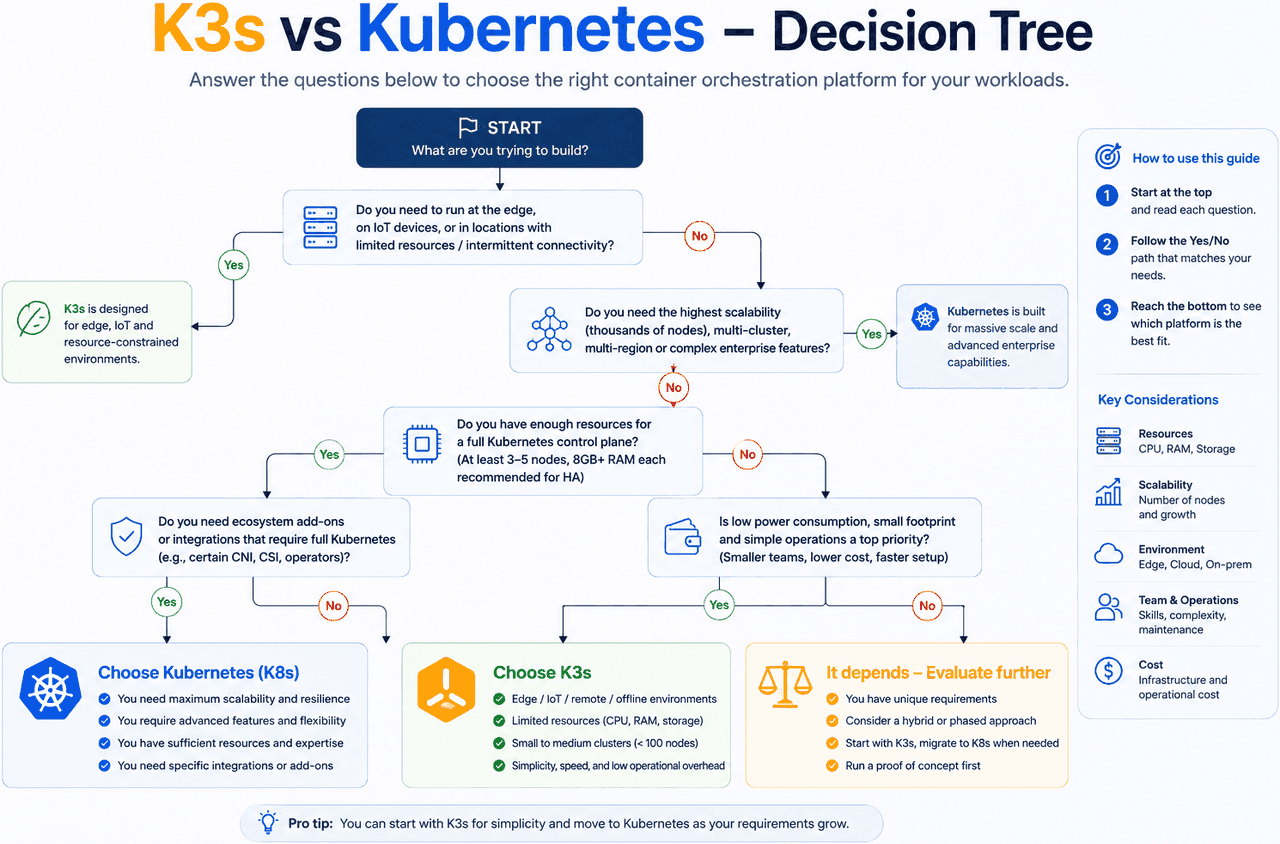
A startup has three VPS instances with 4 GB of RAM each. It needs to run an API, frontend, PostgreSQL, Redis, monitoring, and several scheduled jobs. The team wants Kubernetes-style deployment standards, but only one engineer owns infrastructure. Should it build a full Kubernetes cluster or use K3s to reduce cost and complexity?
Another organization may have multiple teams, strict environment separation, audit requirements, policy enforcement, autoscaling, multiple clusters, and deep cloud integration. Choosing K3s only because it installs quickly may later create governance and lifecycle friction.
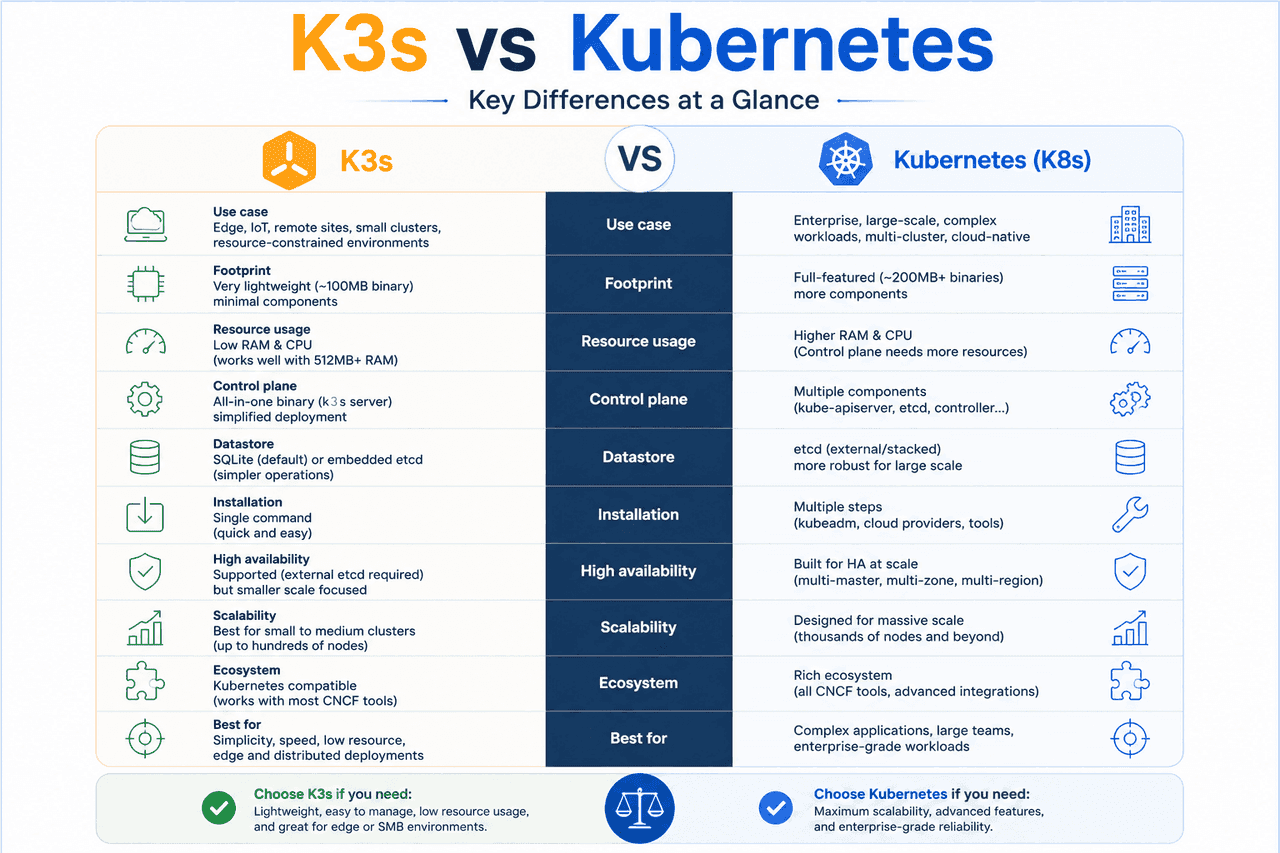
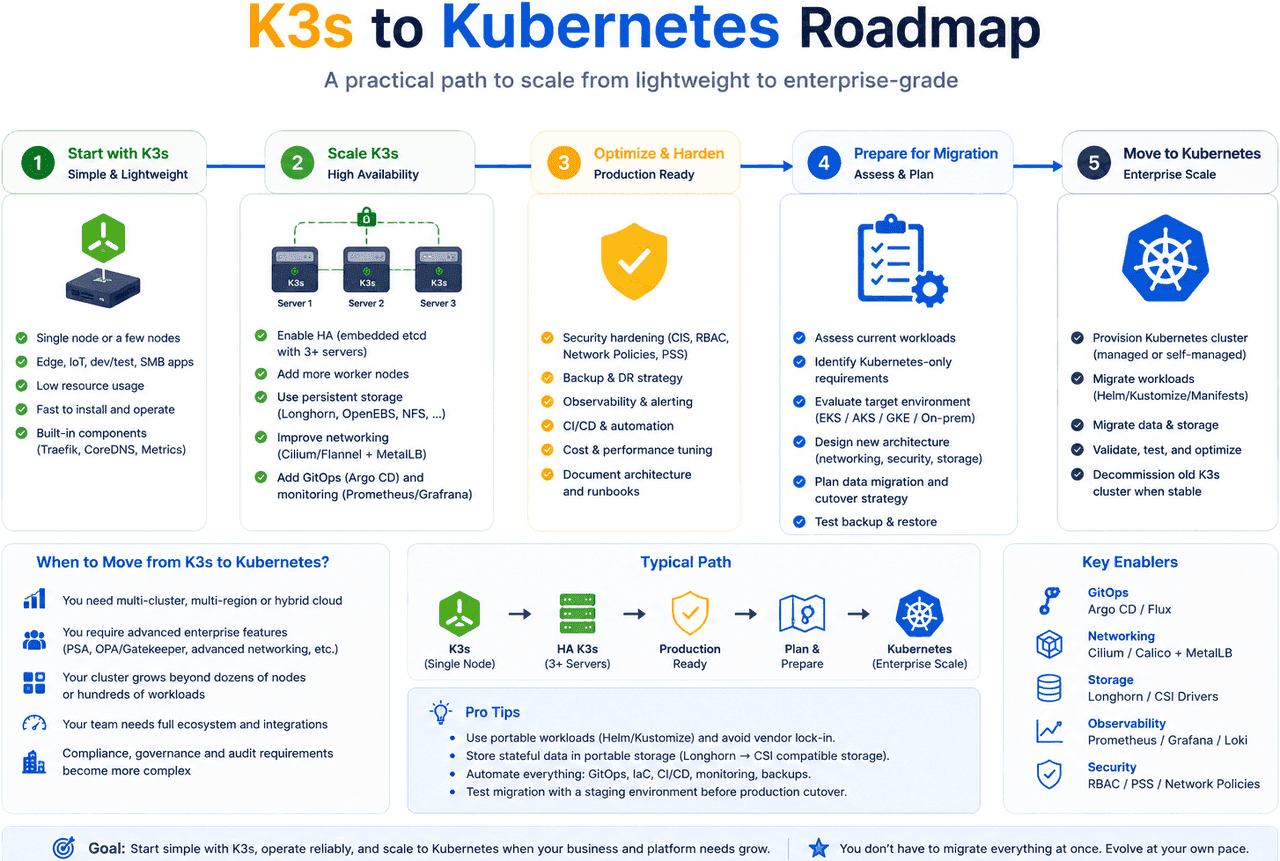
K3s is a lightweight Kubernetes distribution. Standard Kubernetes provides a broader architecture and lifecycle ecosystem. This guide compares them through workloads, resources, availability, security, storage, networking, GitOps, observability, team capability, and total cost of ownership.
Foundation
What is Kubernetes?
A container orchestration platform built around a control plane, worker nodes, and a broad extension ecosystem.
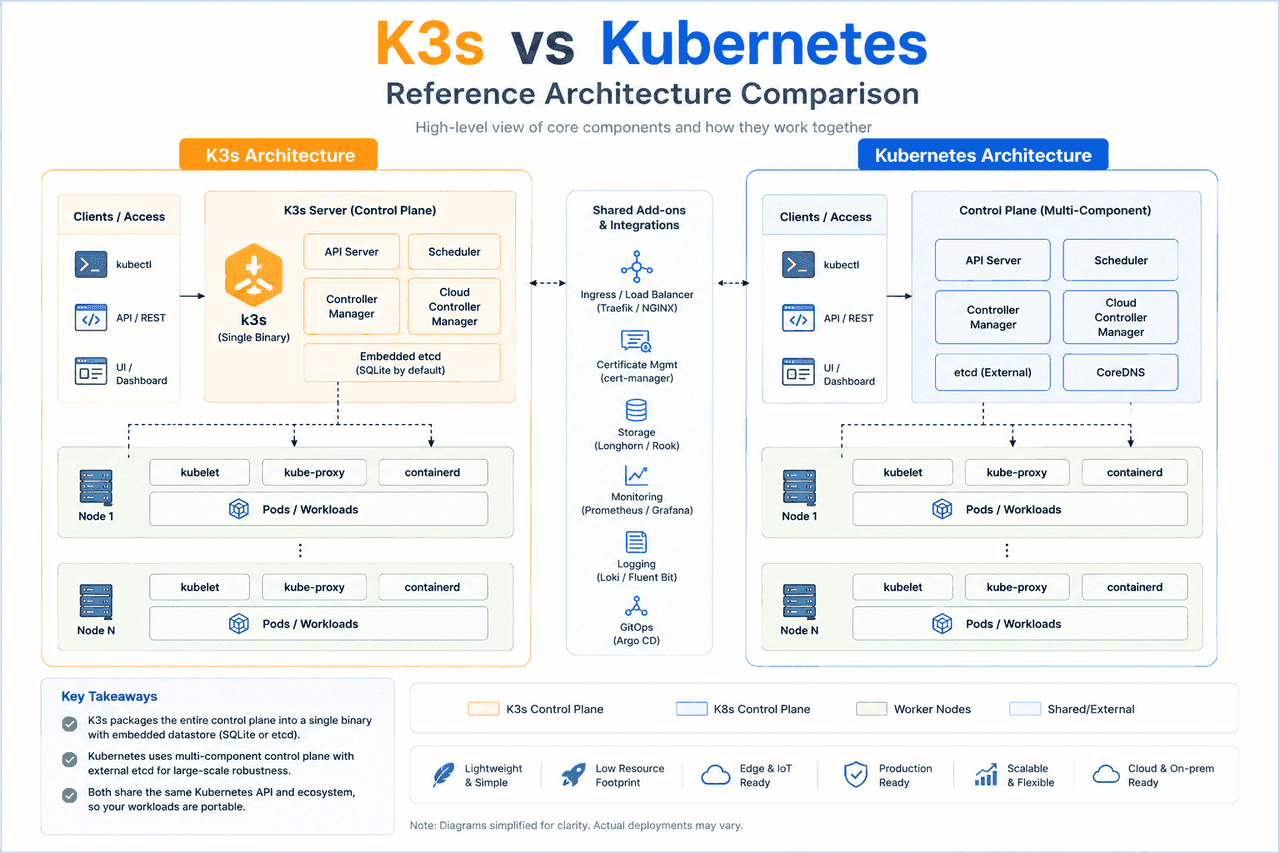
A Kubernetes cluster consists of a control plane and worker nodes. The control plane manages desired state through the API server, scheduler, controller manager, and etcd. Worker nodes run workloads through the kubelet, container runtime, and networking components.
Kubernetes provides consistent APIs for deployments, service discovery, self-healing, scaling, configuration, secrets, policy, and automation. Its ecosystem includes ingress, service mesh, CSI, CNI, GitOps, policy engines, observability, and managed services such as EKS, AKS, and GKE.