FlowNexa perspectives on applying AI with the right scope, controlling cost, and rolling solutions into operations step by step.
Select the first chatbot channel by customer demand, administrative access and follow-up ownership before expanding across multiple channels.
Assess customer intent and support needs on a low-traffic B2B website, then test a narrow task without overstating results from a small sample.
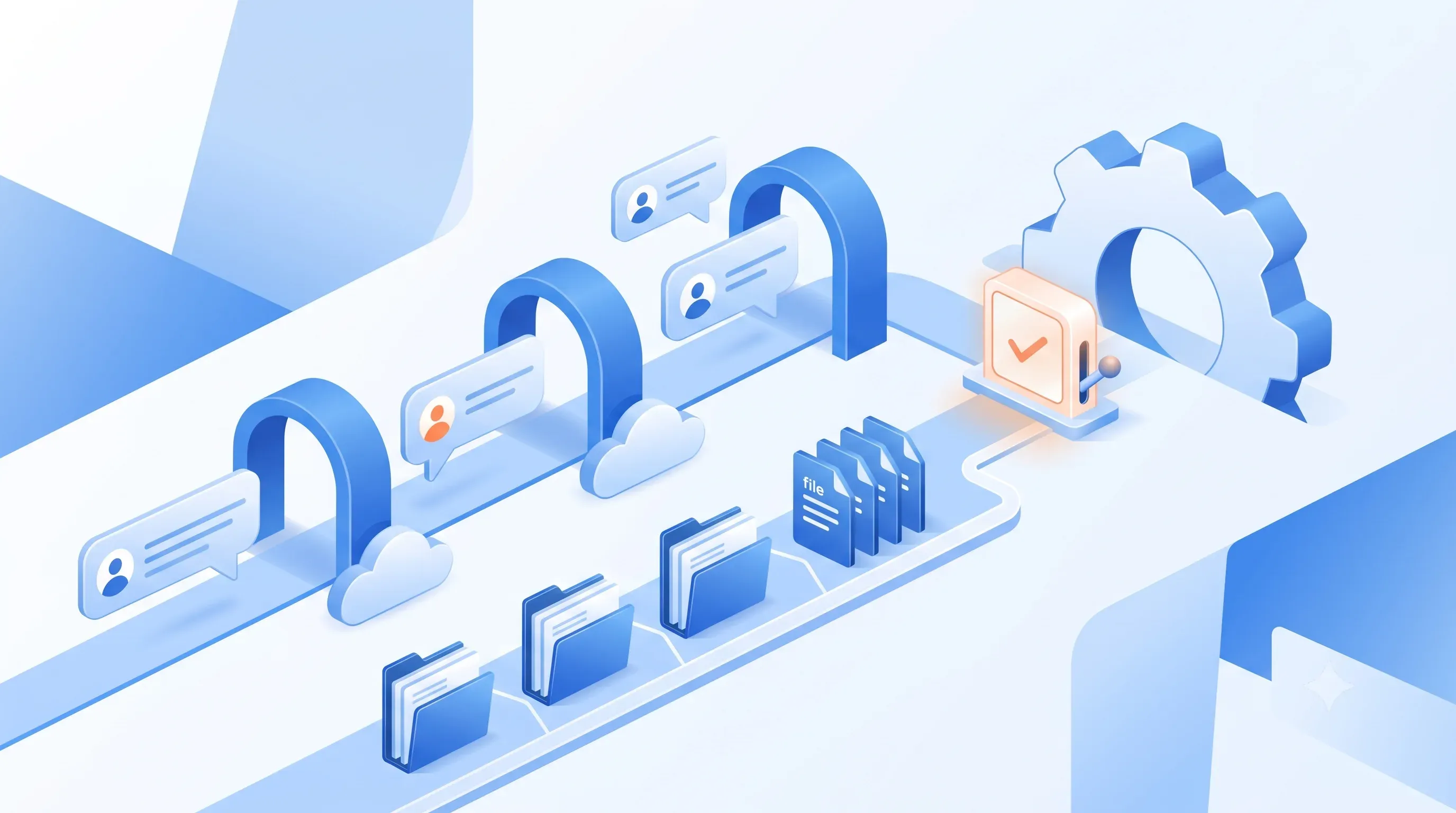
Compare an employee AI tool with a customer-facing website chatbot through access, content control, operations and the next step after an answer.
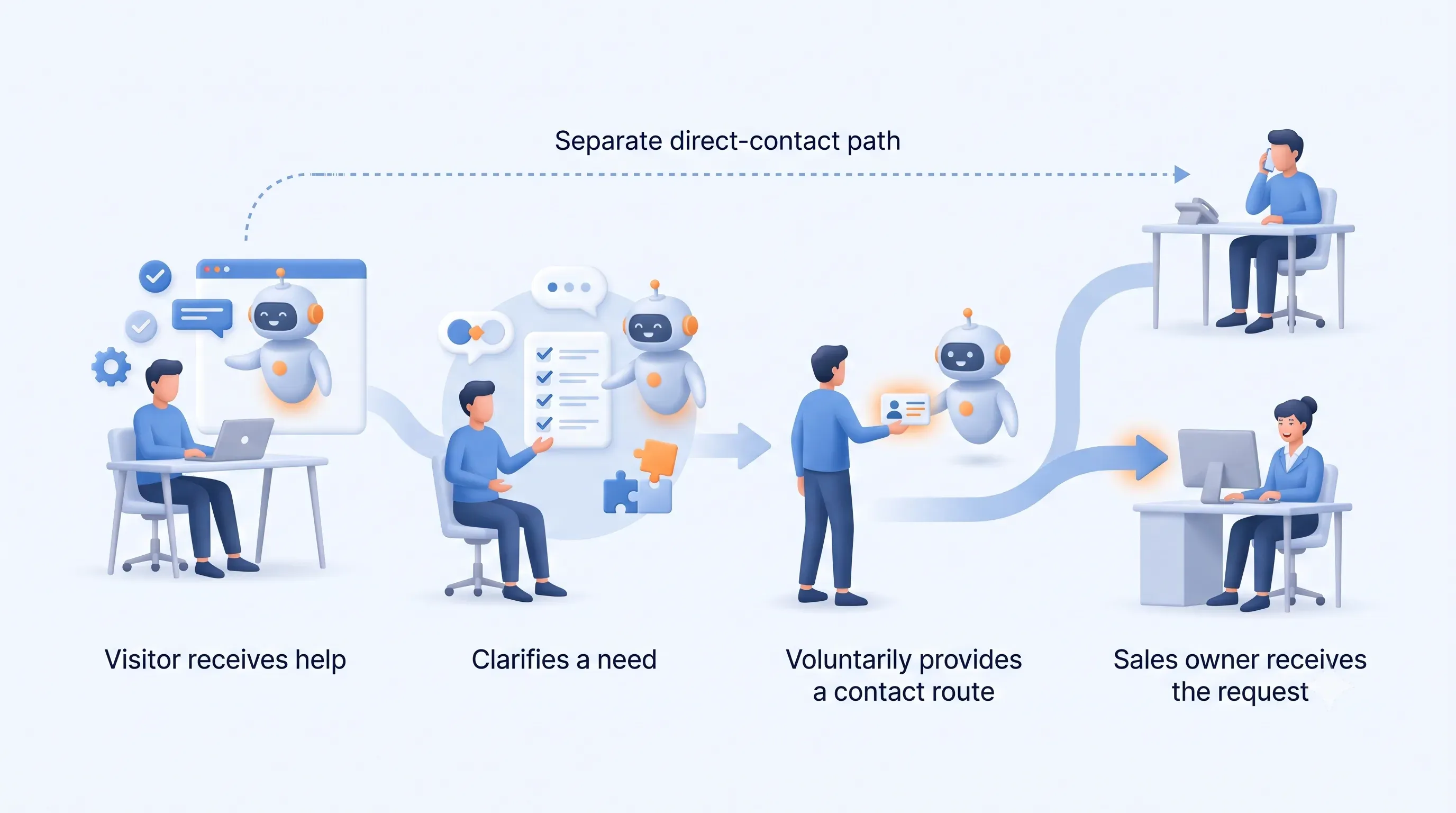
Collect useful enquiries at the right moment: clarify needs, request minimal contact details and confirm that Sales can receive the next step.
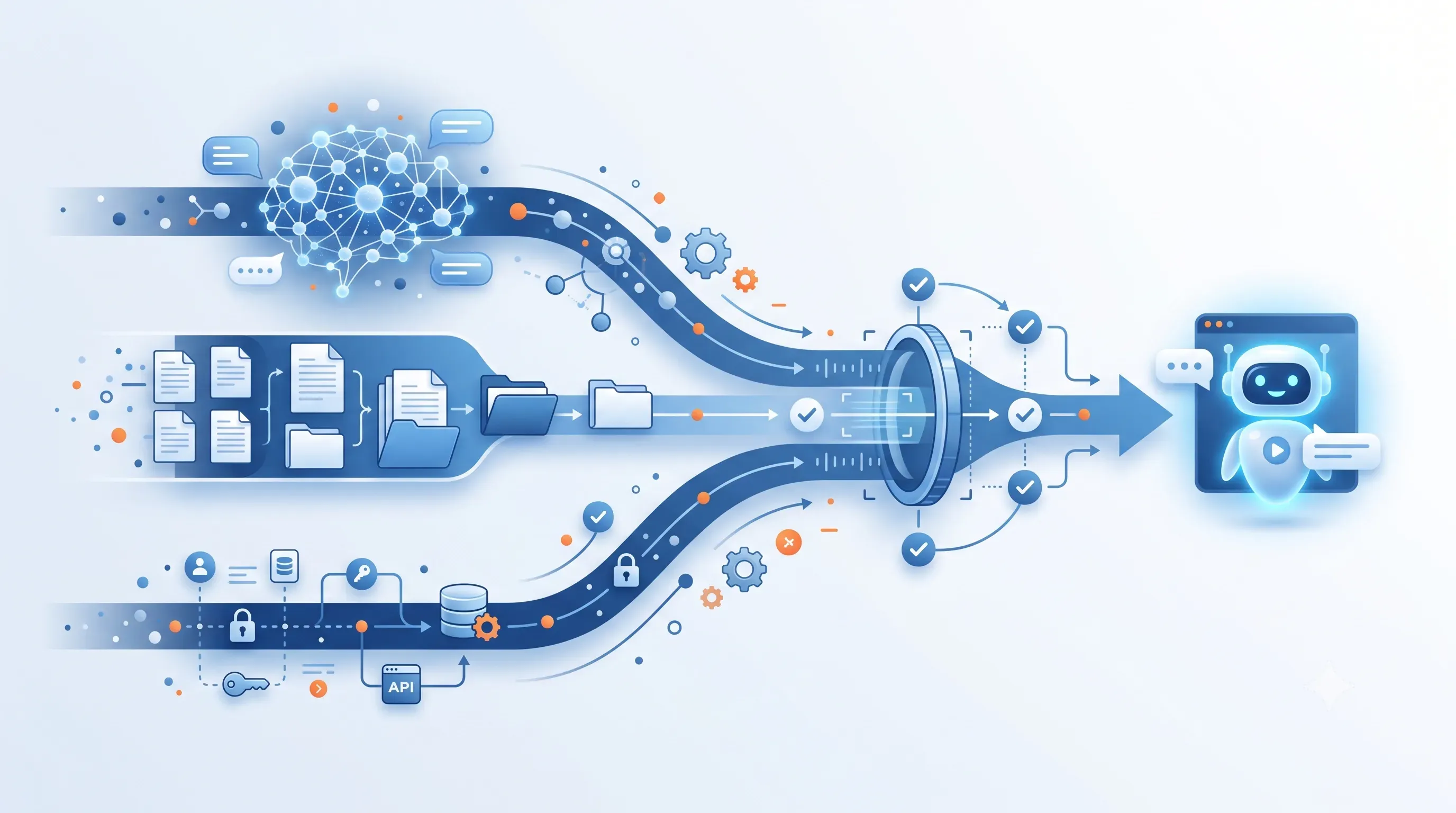
Understand model knowledge, approved documents and API data, then verify how a business chatbot turns a source into an answer.
Assess a website chatbot through repetitive questions, support workload and lead handling, then run a small pilot with measurable acceptance criteria.
Compare chatbots and AI assistants by users, tasks and permissions, then define a scope you can test before choosing a solution.
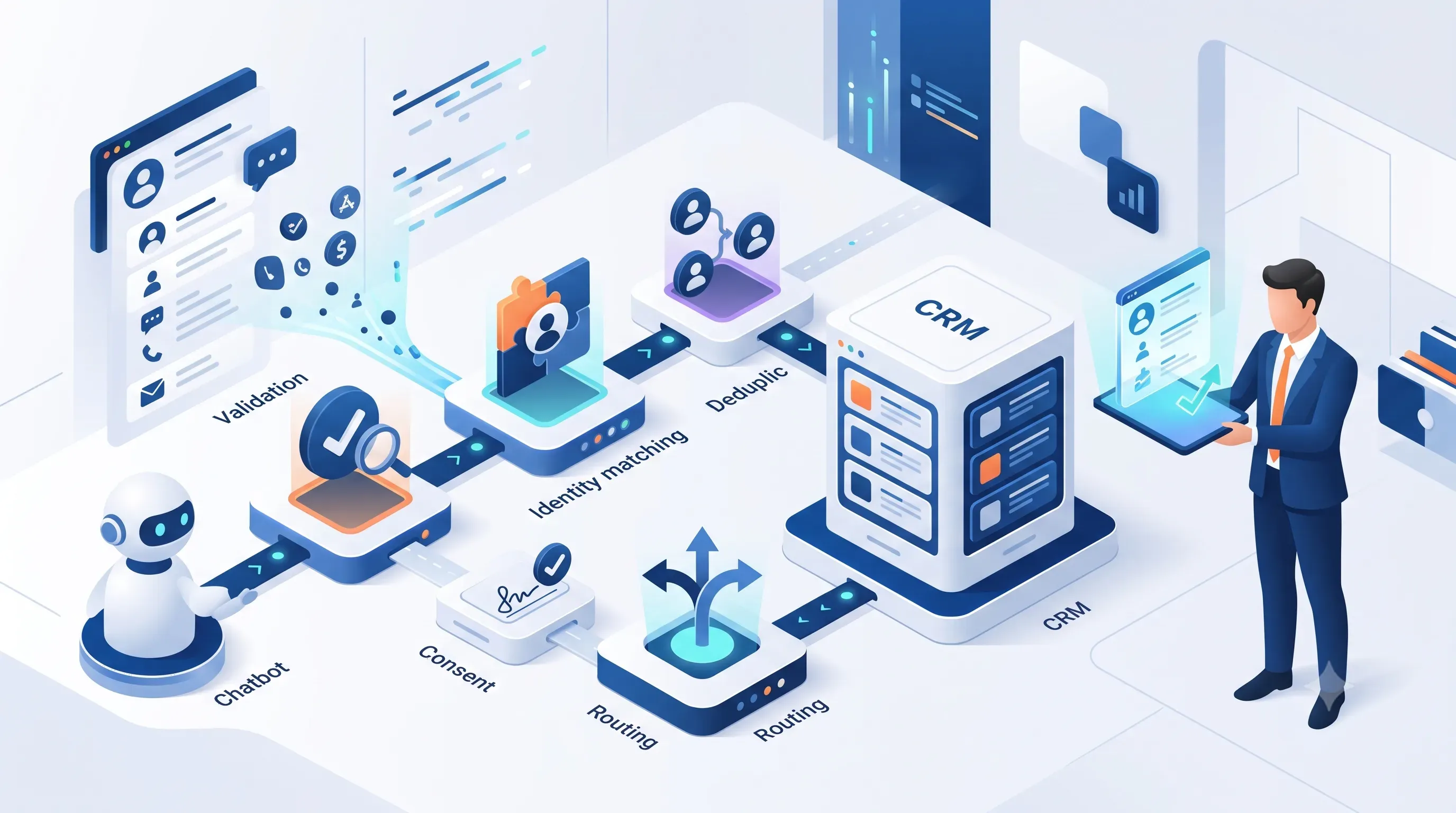
A CRM write-back architecture with validation, identity keys, deduplication, idempotent upsert, consent, routing and exception handling.
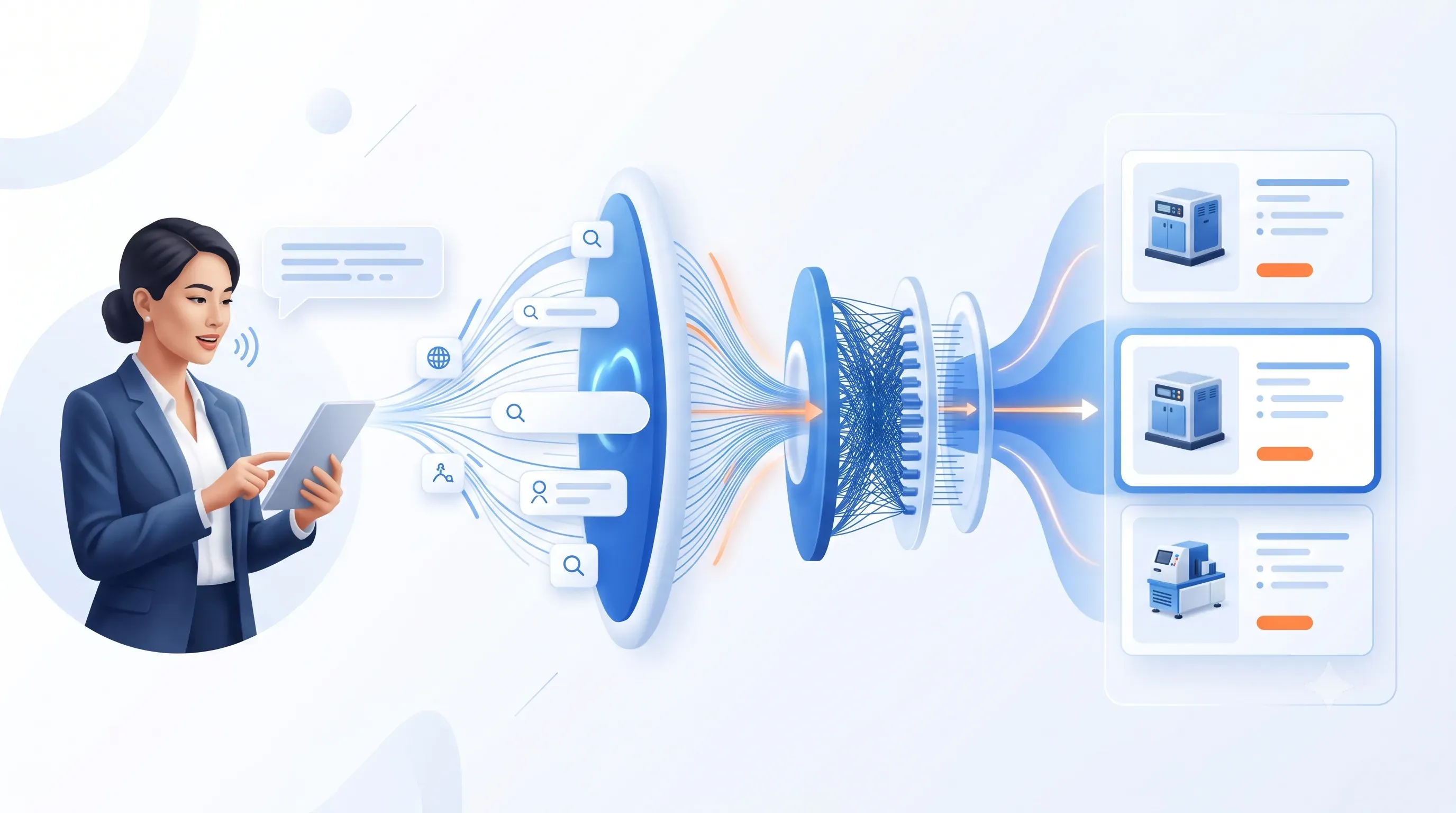
Design AI Product Discovery from applications and constraints to an evidence-backed shortlist instead of forcing buyers to know product codes.