

How to Design an Email-to-Ticket Workflow Without Missing Requests
Design a reliable email-to-ticket workflow with idempotency, durable queues, retries, DLQs, SLA monitoring, alerts, and reconciliation.

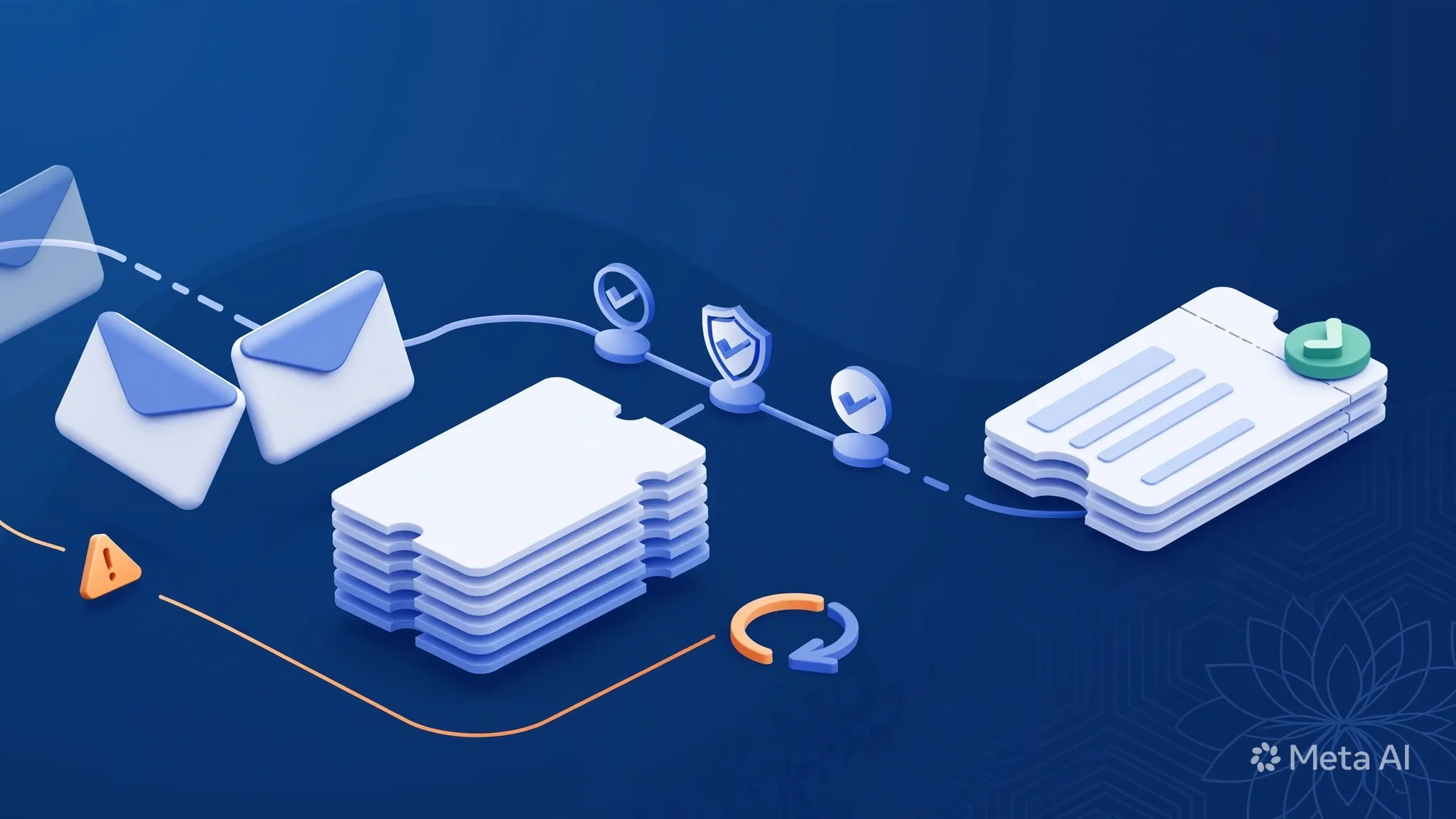
An email-to-ticket workflow should not be a fragile chain that reads a message, calls an API, and marks the message as processed. To prevent missed requests, the system must persist the email first, place the work on a durable queue, create the ticket idempotently, and declare success only after storing the resulting ticketId. Transient failures need bounded retries; persistent failures must move to a dead-letter queue (DLQ), alert an operator, and support safe replay.
The key design decision is to separate ingestion from processing. If the ticketing system slows down or a worker restarts, the email remains represented in the inbox event store and queue instead of disappearing after being marked as read. A scheduled reconciliation job then finds emails without tickets, closing gaps that real-time monitoring may miss.
Risk
Why can an email arrive while its ticket is still missed?
Most failures occur at system boundaries rather than inside the mailbox.
Common causes include lost webhook notifications, expired access tokens, workers stopping mid-run, ticket API errors or timeouts, incorrect mailbox mappings, and workflows marking email as processed before a ticket actually exists. Uncontrolled retries create the opposite problem: one email may produce several tickets.