


The Meeting Has Minutes but Work Is Still Late: How Far Should Action-Item Automation Go?
Turn meeting content into owned, dated, sourced, confirmed tasks without letting AI assign responsibility incorrectly.


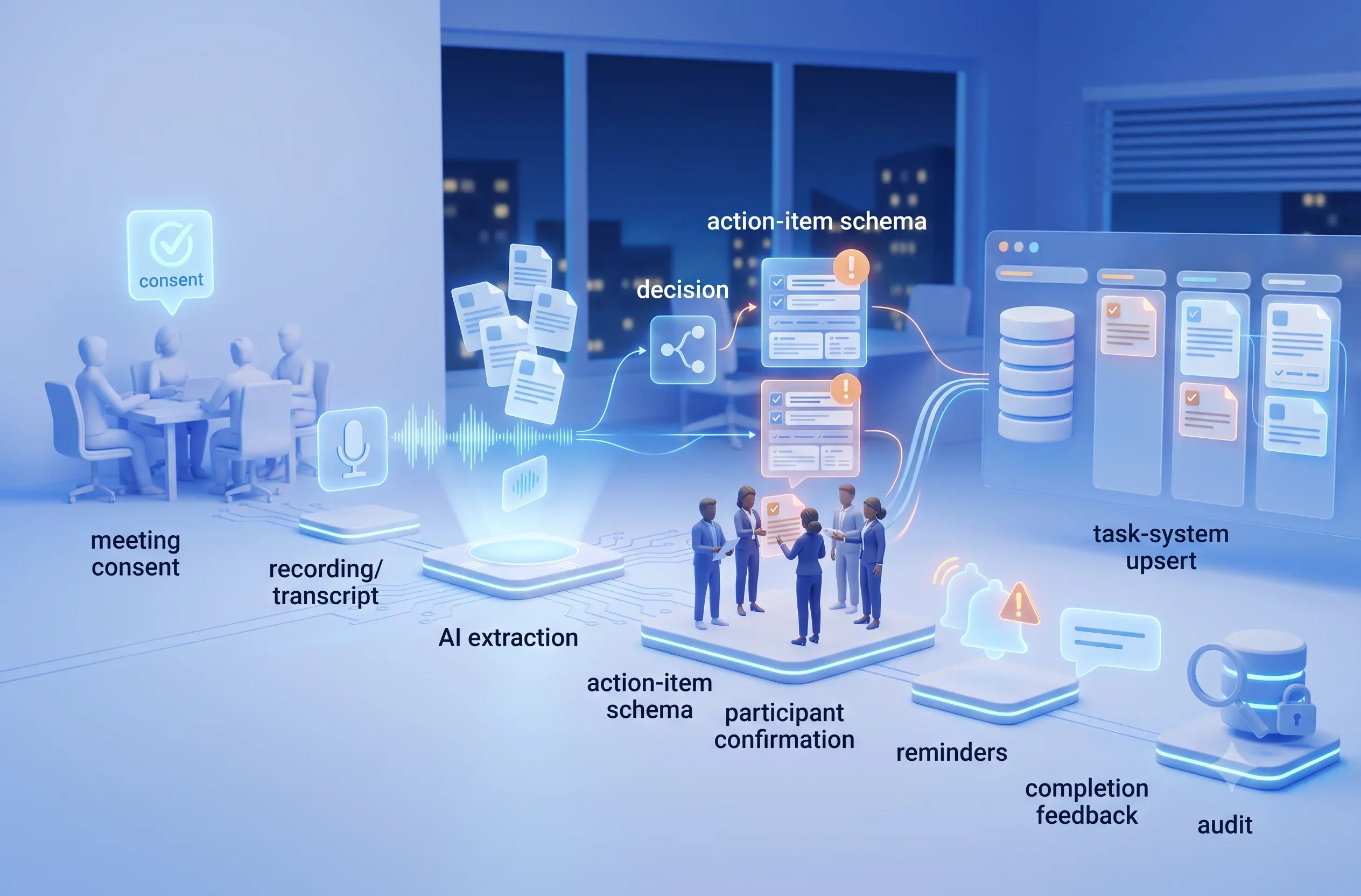
AI can draft meeting minutes and propose action items, but a task should become official only when it has an owner, due date, acceptance criteria, and confirmed meeting evidence. A useful pipeline does not stop at summarization. It separates decisions, actions, open questions, and reference information, then asks relevant people to confirm before upserting into a work-management system.
If AI infers “Tuan will handle this” from an ambiguous statement, it can assign responsibility incorrectly while producing polished output. Automation should reduce administration, not create fictional commitments. Source links, confirmation, and idempotency matter more than generating many tasks.
The gap
Why does work remain late even when minutes exist?
Meeting summary and commitment management are different products.
Minutes often capture discussion but omit owner, completion date, or definition of done. Participants interpret “the technical team will check” differently. Tasks are copied manually into Planner, Asana, or Jira and disappear; recurring meetings create duplicates; relative deadlines such as “next Friday” are resolved against the wrong date or time zone.