

From Chatbot to AI Agent: When Should a Business Upgrade?
Distinguish chatbots from AI agents through planning, tool use, state changes, task completion, and controlled guardrails.

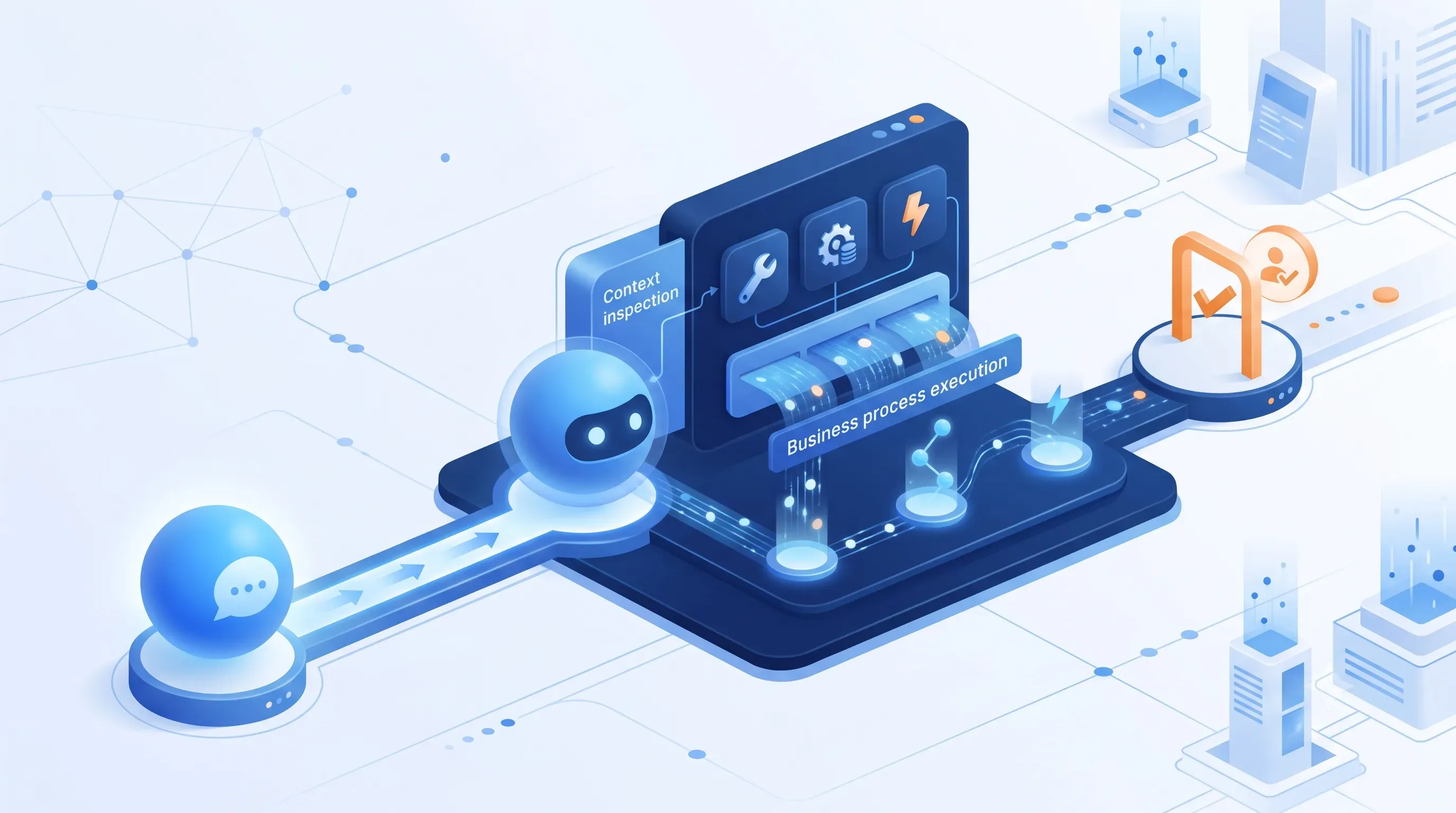
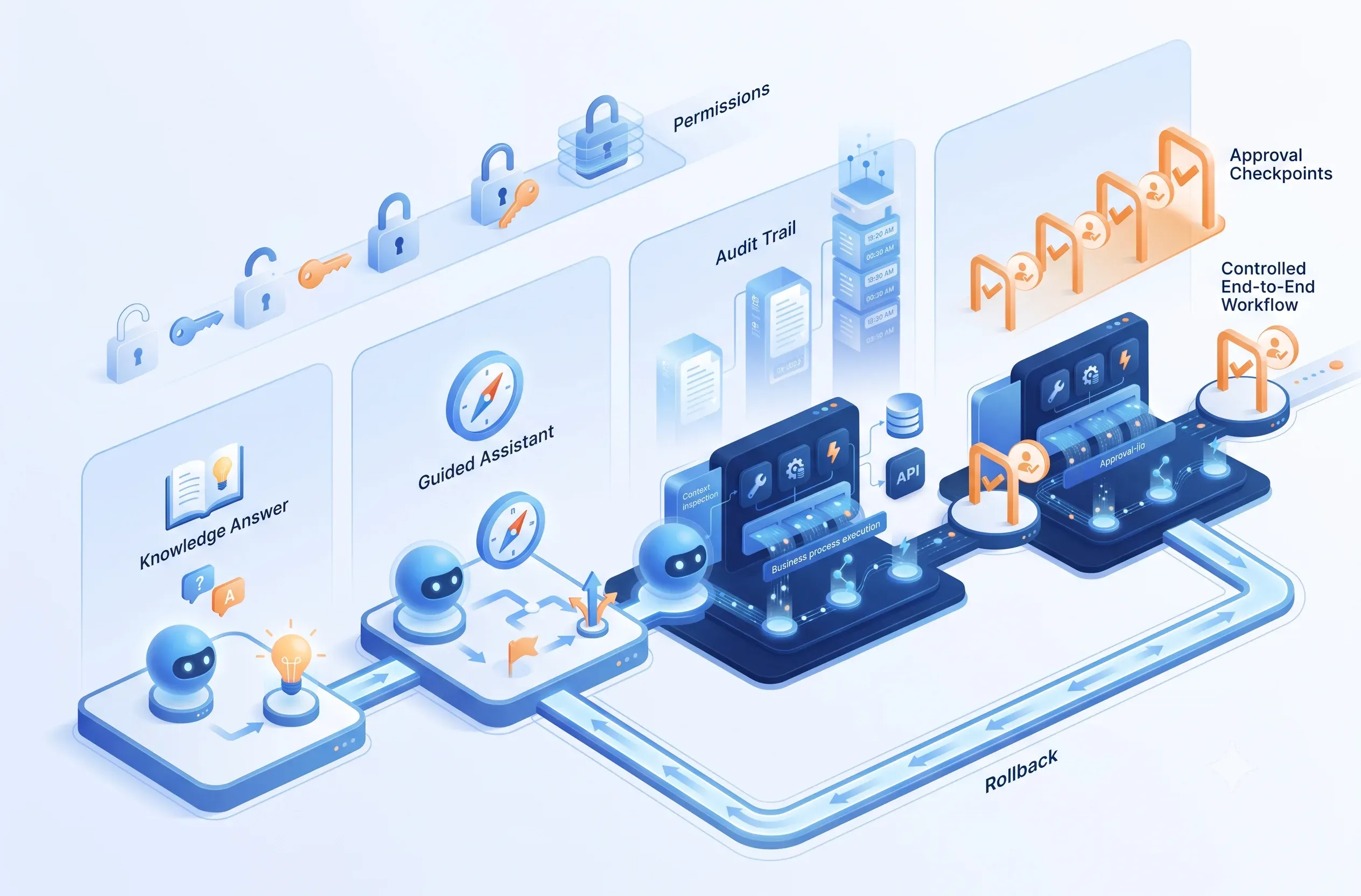
A chatbot answers questions. An AI agent accepts a goal, chooses the next step, calls tools, and follows the work until a completion condition is met or control must return to a person. The important difference is not the chat interface; it is permission to change state in a CRM, ERP, ticketing platform, email service, or internal system.
A business should not upgrade its entire chatbot at once. Select one workflow with a clear outcome, limit permissions, add approval for risky actions, and measure completion. If the need is policy lookup or FAQ response, a chatbot or retrieval workflow is often simpler, less expensive, and easier to control.
Difference
A chatbot responds; an AI agent owns an outcome
The ability to act creates new requirements for permissions, testing, and monitoring.
A conventional chatbot receives a question, retrieves content, and creates an answer. It may call one API without managing the full workflow. An AI agent uses a model to orchestrate multiple steps, select tools according to state, inspect results, try a safe alternative, and stop at an exit condition.