

Standardize the knowledge base before RAG ingestion: prevent bad data and unreliable answers
A practical pipeline for turning PDF, DOCX, TXT and Markdown files into a governed, structured and retrieval-ready RAG knowledge base.

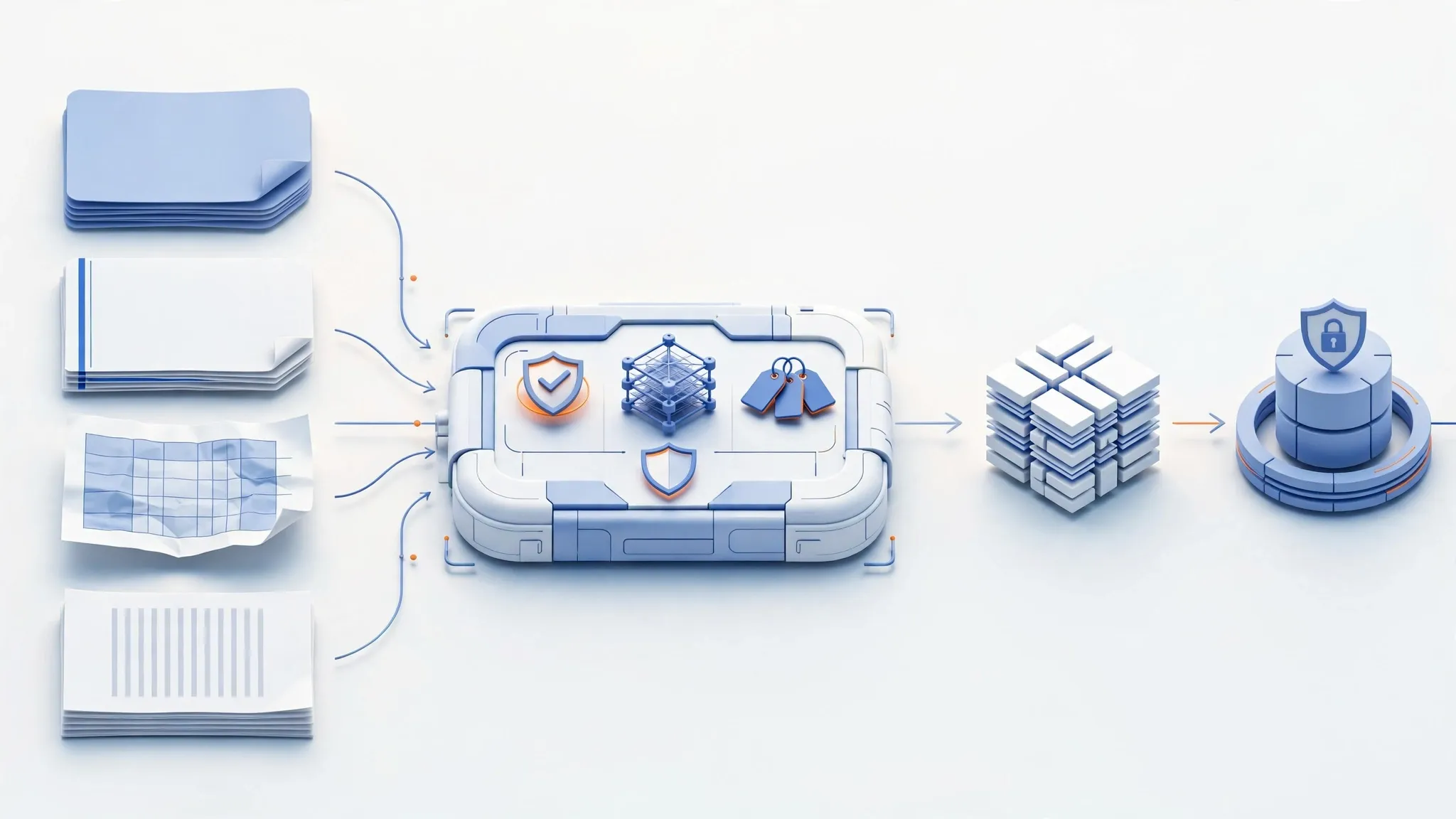
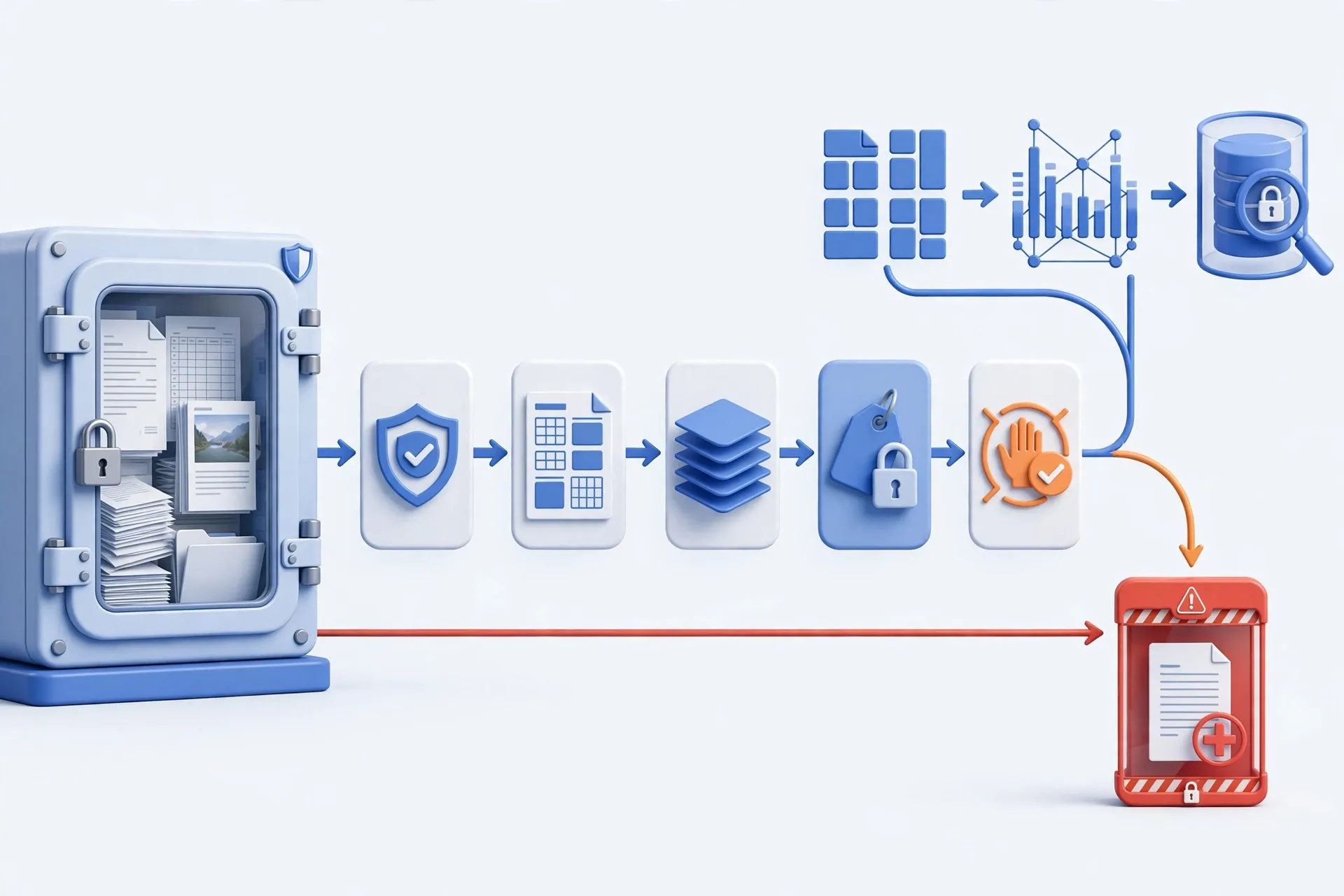
A RAG system cannot answer reliably when its knowledge base contains broken OCR, duplicate content, expired policies or documents mixed across properties. The right approach is not to embed a document immediately after upload. Add a standardization layer between raw sources and the vector index: validate files, extract structure, clean content under controlled rules, assign metadata and permissions, detect conflicts, approve the canonical result, and only then chunk and index it.
The objective is not merely well-formatted text. It is a traceable knowledge artifact that records where a fact came from, when it applies, which tenant or property owns it, and who may retrieve it. Chunking should begin only after that canonical artifact passes defined quality gates.
Problem
Why does sending raw documents directly into RAG often fail?
Embedding does not correct bad data; it only makes indexed data retrievable.
Warning signs