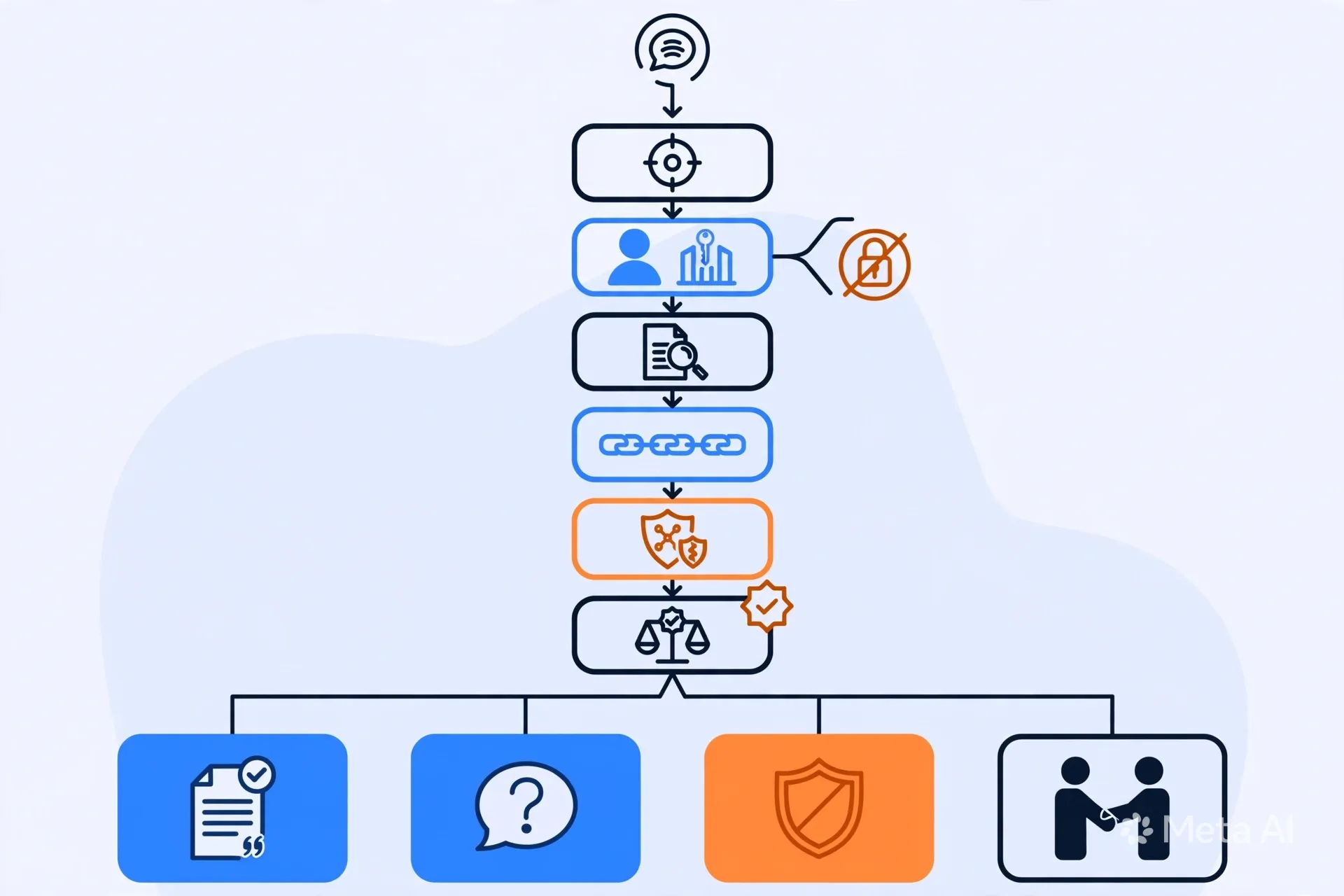



When Should AI Refuse to Answer? Designing Safe Abstention
A practical framework for deciding when an enterprise AI assistant or RAG system should answer, clarify, refuse, or escalate.

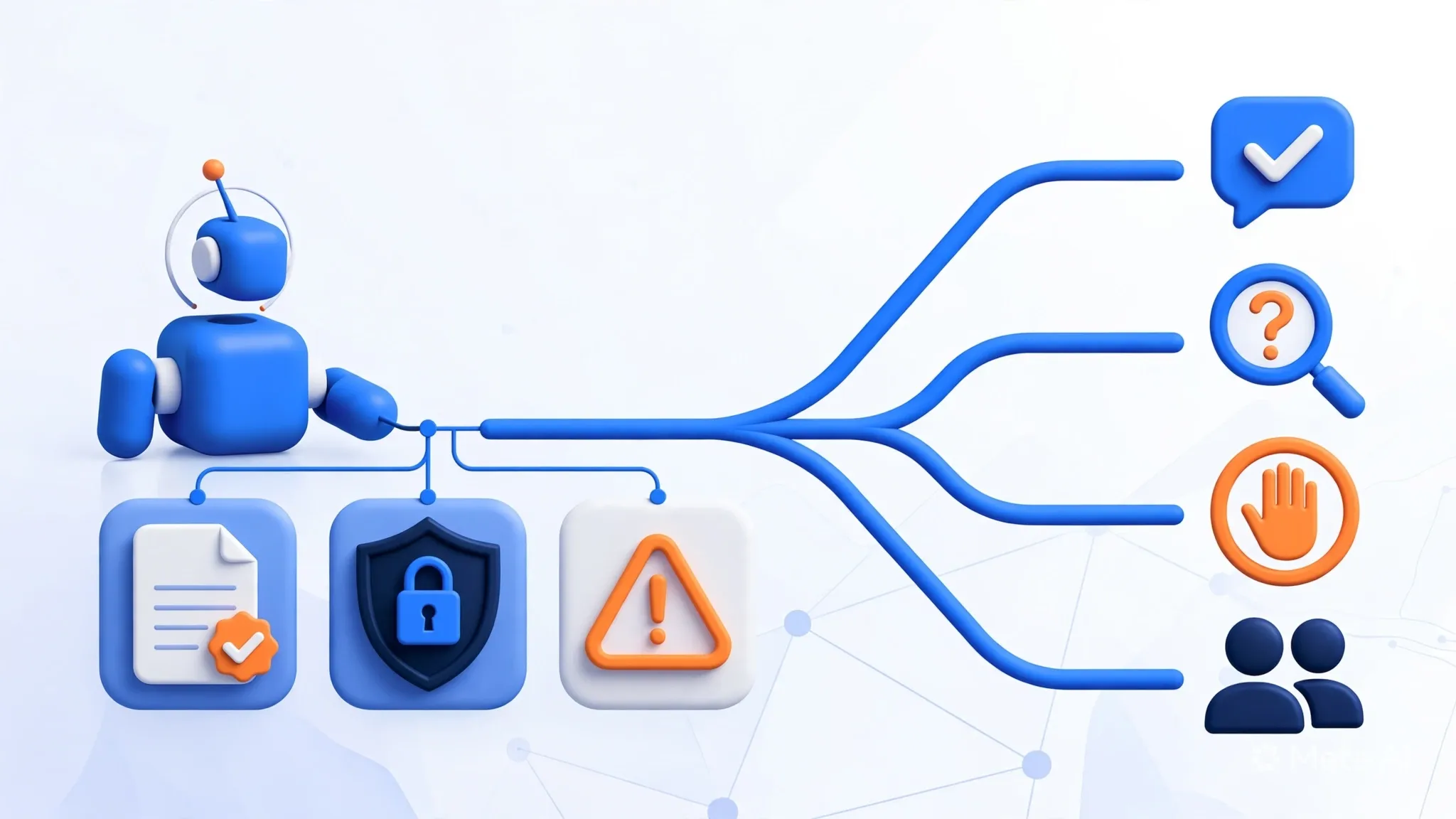
AI should refuse to answer when it cannot produce a response that is accurate, grounded, authorized, and safe within its assigned scope. For an enterprise AI assistant or RAG system, common triggers include missing evidence, conflicting or expired data, an out-of-scope request, insufficient user access, signs of prompt injection, or a high-impact financial, legal, medical, or operational outcome that has not been verified.
Refusal should not end the conversation. The system should choose among four outcomes: answer with evidence, ask for clarification, refuse with a safe reason, or escalate to an accountable person. This is a testable business decision, not something that should depend solely on how confident the model sounds.
The problem
A fluent answer is not necessarily a trustworthy answer
Risk grows when the system requires AI to produce an answer for every request.
A language model generates plausible next tokens; it does not automatically know which information is the organization's source of truth. RAG supplies relevant documents and can reduce fabrication, but it does not guarantee correct retrieval or current source material. Azure describes groundedness as whether a response is supported by supplied sources, while Google emphasizes linking output to verifiable data.