



Skip to content
FlowNexa
  • AI Services
  • Solutions
  • About
  • Blog
VIEN
Book a consultation
Back to Blog
Automation12 min readFlowNexa Editorial Team

Build Workflow Automation In-House or Hire a Specialist?

A practical framework for choosing in-house, outsourced, or hybrid workflow automation based on complexity, risk, operating capability, and total cost of ownership.

Updated: Aug 3, 2026
Build Workflow Automation In-House or Hire a Specialist?

The short answer

Build in-house when the process is simple, touches few systems, carries low risk, and has a long-term technical owner. Hire a specialist when the workflow spans systems, sensitive data, approvals, retries, access control, or actions that directly affect money and customers. For most SMBs, a hybrid model works best: a partner establishes the platform, guardrails, and critical workflows, while the internal team takes over operations and extends low-risk flows.

Do not decide on initial implementation cost alone. Compare total cost of ownership, time to value, business-error exposure, and the ability to operate the system after its original builder leaves.

Context

Why is a working workflow not necessarily production-ready?

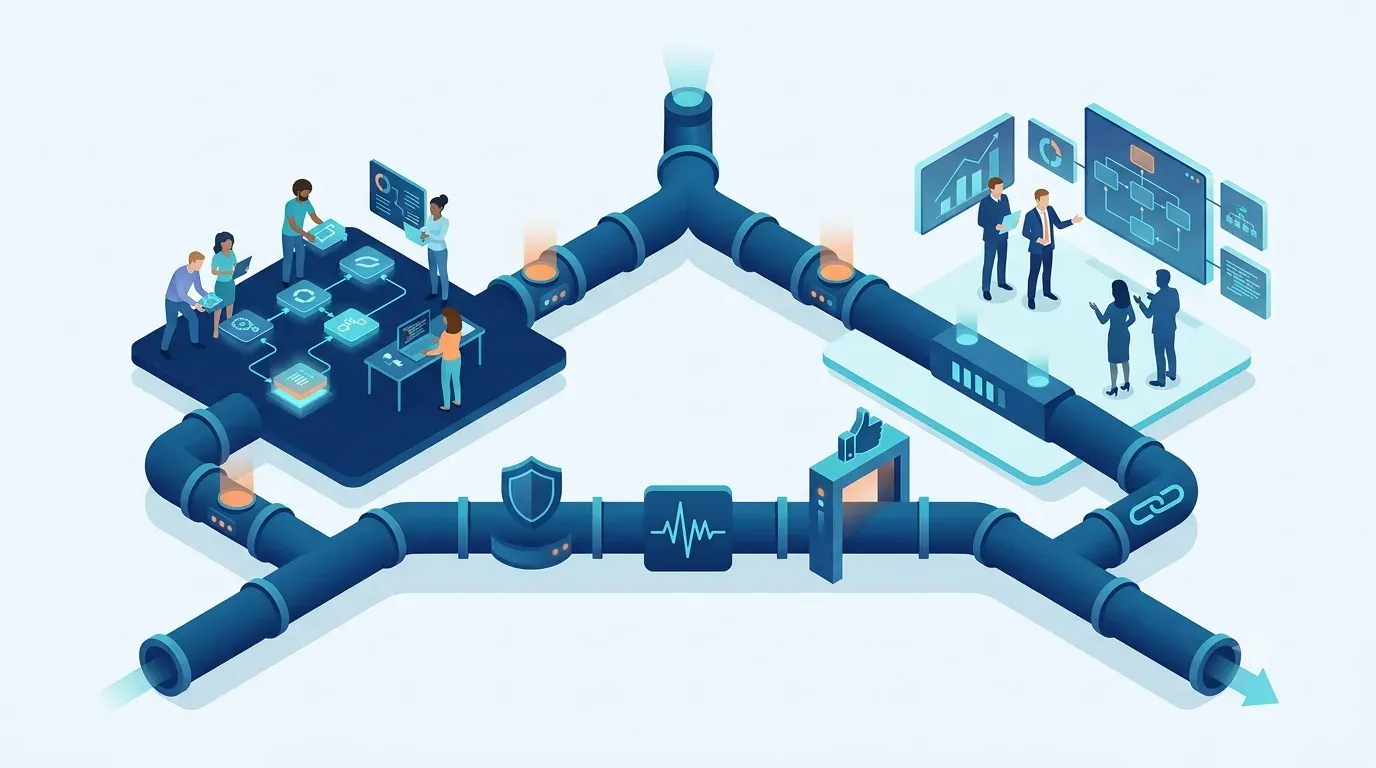
A successful integration demo is only the beginning; production must withstand failures, retries, API changes, and human error.

A workflow that copies form data into a spreadsheet may take hours to build. The requirements change when it creates invoices, updates a CRM, emails customers, or uses AI to classify requests. You then need input validation, duplicate protection, least-privilege credentials, partial-failure handling, alerts, audit logs, and a safe fallback when a downstream system is unavailable.
The major cost is rarely connecting nodes. It is understanding the process, handling exceptions, and keeping the automation dependable six or twelve months later.

Decision principle

Build in-house when the business can own the workflow lifecycle—not merely produce its first version.

Option 1

When should you build workflow automation in-house?

In-house delivery fits a clear scope, low risk, and a team with capacity to maintain it.

Good fit

Consider building internally when most conditions are true

Start with one small workflow and measure its results before scaling.

Stable process

Inputs, outputs, approvers, and exceptions are already documented.

Standard integrations

The flow uses documented APIs or connectors without complex transaction logic.

Low risk

Mistakes are detectable and reversible; the flow does not move money or delete records autonomously.

Technical owner

Someone owns credentials, versions, alerts, and incident response.

Option 2

When should you hire a custom workflow specialist?

Specialists can shorten the learning curve and prevent architectural mistakes that become expensive later.

Outsourcing makes sense when a workflow crosses departments or systems; includes approval branches and SLAs; handles personal, financial, or privileged data; applies AI to untrusted inputs; requires availability, queues, retries, idempotency, and centralized observability; or must launch quickly while the internal team lacks relevant experience.

A partner should not merely hand over a working diagram. The value being purchased is sound architecture, risk controls, exception testing, documentation, and capability transfer.

Comparison

Do not compare a proposal with the hours needed to drag nodes

Compare total cost of ownership over the same period.

A practical TCO formula

TCO = process discovery + implementation + infrastructure and licenses + testing + security + monitoring + incident handling + upgrades + training + downtime impact.

Estimate it over 12–24 months using your own operational data. Do not apply one generic savings percentage to every workflow. For an internal build, include staff opportunity cost. For outsourcing, include change fees, post-handover support, and the cost of moving to another provider.

Quick matrix

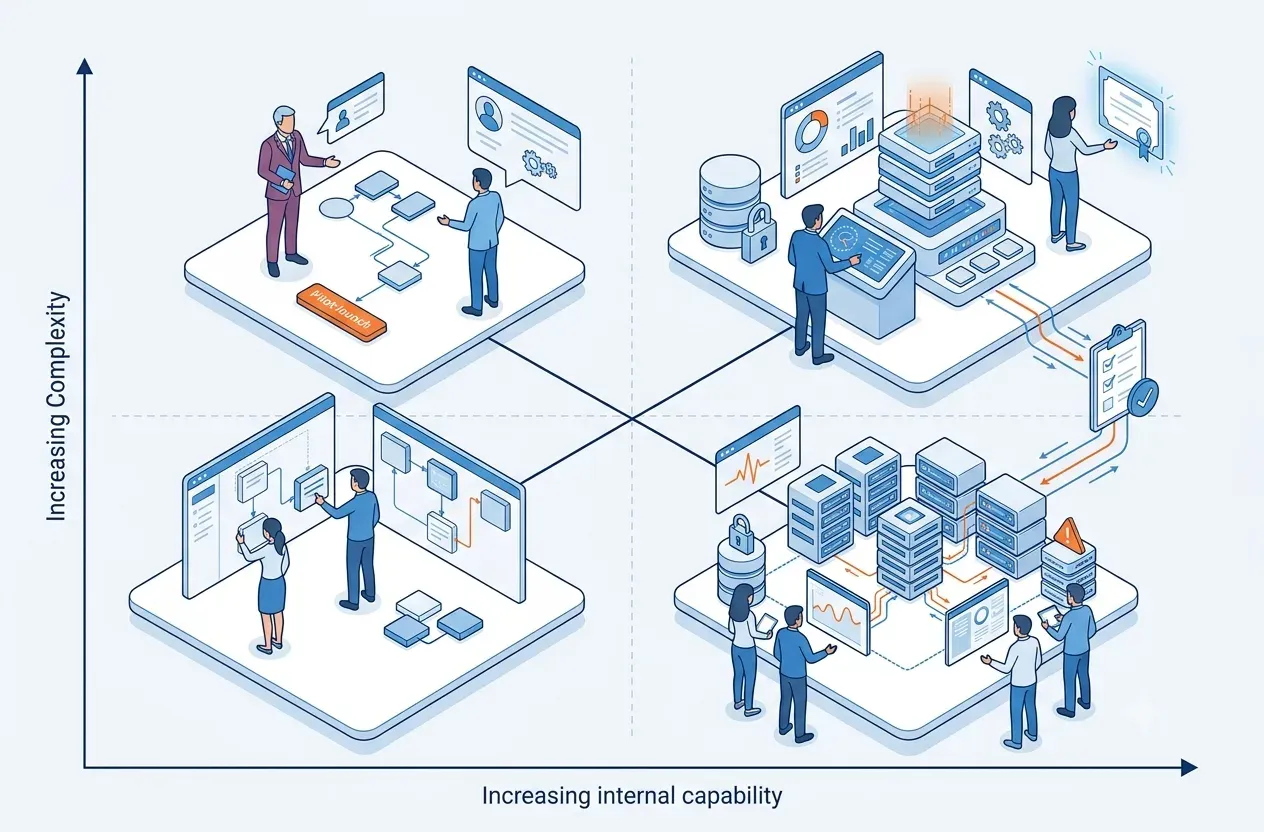
Choose a model by complexity and internal capability

This is a qualitative screen; confirm it through a short discovery before signing scope.

Simple + strong capability

Build in-house with standard templates and periodic security reviews.

Complex + strong capability

Keep ownership internal and use an architect or independent reviewer where needed.

Simple + limited capability

Hire for the MVP, training, and a runbook that enables takeover.

Complex + limited capability

Use a designed-and-managed service with an SLA and phased capability transfer.

Hybrid

A hybrid model is often the best fit for SMBs

Separate the partner-built foundation from changes the internal team can safely make.

A strong hybrid model has three layers. The partner establishes shared foundations: development, staging and production environments, secrets management, logging, backups, CI/CD, and workflow conventions. Both teams build the first critical workflows and test failure scenarios together. The internal team then handles routine operations, while the partner supports major changes or incidents under an SLA.

This retains early speed without turning every small adjustment into a paid request.

Acceptance

What must a production-ready workflow handover include?

Ownership and recoverability matter as much as business logic.

Checklist

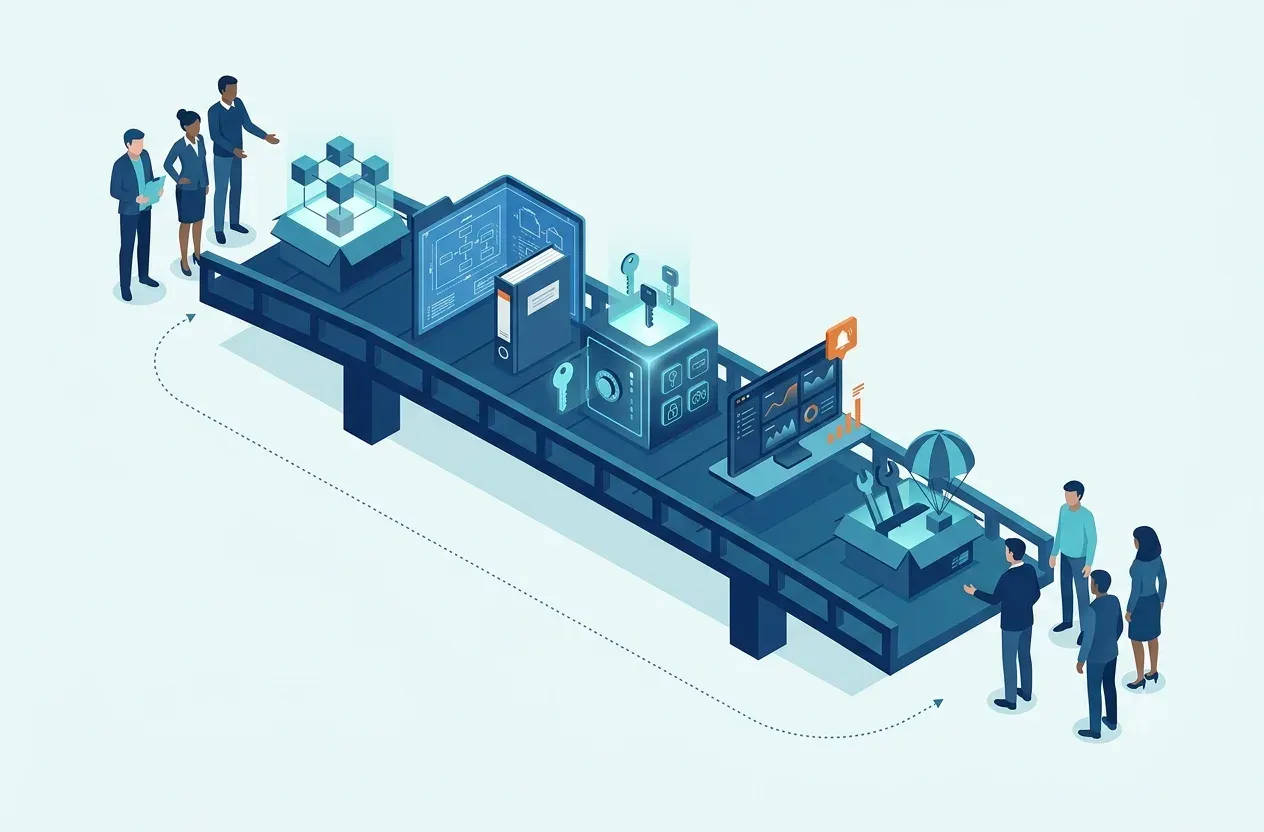
Minimum handover package

Put these items in scope and acceptance criteria before work begins.

Assets and ownership

Workflow source or export, custom code, accounts, licenses, and infrastructure belong to the business.

Operations documentation

Architecture, data mapping, credential owners, schedules, dependencies, runbooks, and rollback steps.

Safety controls

Least privilege, secret vaults, approval for sensitive actions, idempotency, and audit logs.

Testing

Happy path, missing data, timeouts, rate limits, API failure, retries, and duplicate events.

Observability

Dashboards, owned alerts, correlation IDs, log retention, and a DLQ handling process.

Vendor selection

Seven questions to ask before signing

A capable partner should explain how the system fails, not only how it runs.

  1. Who owns the accounts, workflows, source, and credentials after the project?
  2. Is there a staging environment and a test set for retries, timeouts, and duplicates?
  3. How are secrets stored, scoped, and rotated?
  4. How does the design compensate when one step succeeds and the next fails?
  5. Who receives alerts, how quickly, and under what support SLA?
  6. What are the change fees, scope limits, and termination terms?
  7. What training, documentation, and transfer plan enables internal operations?

Measurement

Which KPIs prove that automation creates value?

Measure both business efficiency and technical reliability.

Record a pre-automation baseline, then track median and p95 cycle time; straight-through processing rate; failed or duplicated runs; time to detect and recover; manual hours removed; exception backlog; cost per transaction; and SLA compliance.

Set go/no-go thresholds for the pilot. Thresholds must reflect the business's own data and risk tolerance rather than a copied industry benchmark.

FAQ

Frequently asked questions

Short answers before choosing a delivery model.

Does n8n eliminate the need for developers?

No. Simple flows can be low-code, but custom integrations, security, testing, and production operations still require technical capability.

What makes a good pilot workflow?

Choose a frequent, repetitive process with reasonably structured inputs, measurable impact, and reversible errors.

Does outsourcing create vendor lock-in?

It can if the business does not own accounts, source or exports, credentials, documentation, and deployment processes. Explicit handover terms reduce that risk.

Should we self-host n8n to save money?

Only if the team can own upgrades, security, backups, capacity, and incidents. Low infrastructure cost does not automatically mean low TCO.

Is a maintenance contract needed after handover?

Critical workflows need a named owner and clear SLA, whether that responsibility is internal or external.

FlowNexa

Choose the right operating model before scaling automation

FlowNexa can assess processes, design a pilot, and establish a secure-by-default workflow foundation with clear documentation, testing, and handover.

Workflow assessment

Map the process, dependencies, exceptions, risk, and measurable ROI opportunities.

Gated pilot

Build an MVP with KPIs, go/no-go criteria, and controlled expansion scope.

Designed for transfer

The business retains ownership, runbooks, observability, and operational capability.

Read next

Related insights

Customer Experience

A Customer Starts on Facebook and Continues on Zalo: How Do You Preserve Context?

Design omnichannel customer context across Facebook, Zalo, and CRM without incorrect identity merges, data exposure, or forcing customers to repeat themselves.

Workflow Automation

Automation Says Success but the Business Process Failed: Verify the Outcome

Separate technical success from business success and design workflows with outcome assertions, reconciliation, audit trails, and recovery.

Business Automation

Quotation Sent, Customer Silent: Automate Follow-Up Without Becoming Annoying

Design a quotation follow-up process with ownership, SLAs, behavioral signals, and stop conditions so Sales protects opportunities without pressuring customers.

FlowNexa

FlowNexa helps small and mid-sized businesses bring AI into customer service, workflow automation, and efficient data operations. Cloud-native and DevSecOps provide the foundation that keeps these solutions secure, reliable, and easy to scale.

FLOWNEXA COMPANY LIMITED

Tax ID: 0319612776

Address: 228/6 Au Duong Lan, Chanh Hung Ward, Ho Chi Minh City, Vietnam

Website: flownexa.ai

Services

AI chatbots & supportAI assistantsAutomationCloud & infrastructure

Company

AboutBlogPrivacyTerms

Contact

hello@flownexa.ai
0948 279 029
Chat on Zalo
Chat on Messenger
Replies within one business day

© 2026 FlowNexa. All rights reserved.

Microsoft, Azure, Microsoft 365, AWS, Kubernetes, and Cloudflare are trademarks of their respective owners. FlowNexa is not claiming partnership unless expressly stated.

B2B service website — no online ordering or online payment.

Practical AI · Automation · Secure CloudPrivacyTermsCookiesLegal
Share:
FacebookZaloLinkedIn
Share:
FacebookZaloLinkedIn