


Shadow AI in the Enterprise: How to Govern It Without a Blanket Ban
Identify unmanaged employee AI use and build practical policy, approved tools, data classification, logging, and exception handling.

Shadow AI is the use of AI tools or features for work without organizational approval, assessment, or visibility. The risk extends beyond “data pasted into a chatbot.” It includes personal accounts without administration, AI connections to Drive or email, agents taking actions, unchecked outputs, and business decisions without an audit trail.
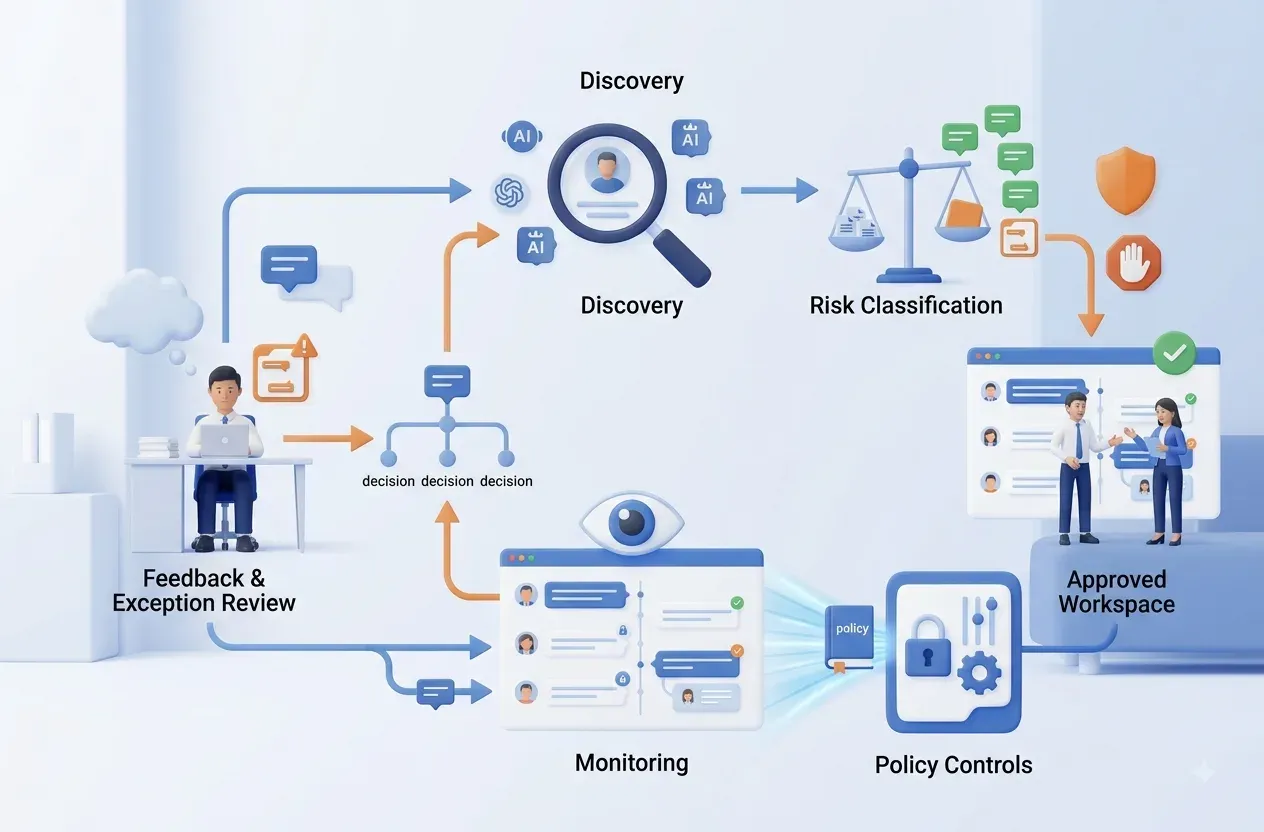
A blanket ban often pushes usage further out of sight. A practical response discovers demand, classifies use cases and data, provides approved options, applies technical boundaries, trains through real scenarios, and maintains a fast exception process. The goal is to bring AI into an accountable operating model without eliminating its productivity value.
Discovery
Shadow AI often starts with a legitimate work need
Employees want to complete a task faster while official tools do not yet meet the need.
Common examples include summarizing a contract with a personal AI account, uploading customer files for analysis, installing an extension from an unknown provider, building a bot with an individual API key, or connecting AI to an internal document store. AI features may also appear inside existing SaaS products without the organization noticing that the data boundary changed.