


AI Chatbot Gives Wrong Prices or Policies: Where Should You Start?
Control incorrect chatbot pricing and policy answers with authoritative sources, versions, retrieval filters, evidence gates, QA and monitoring.
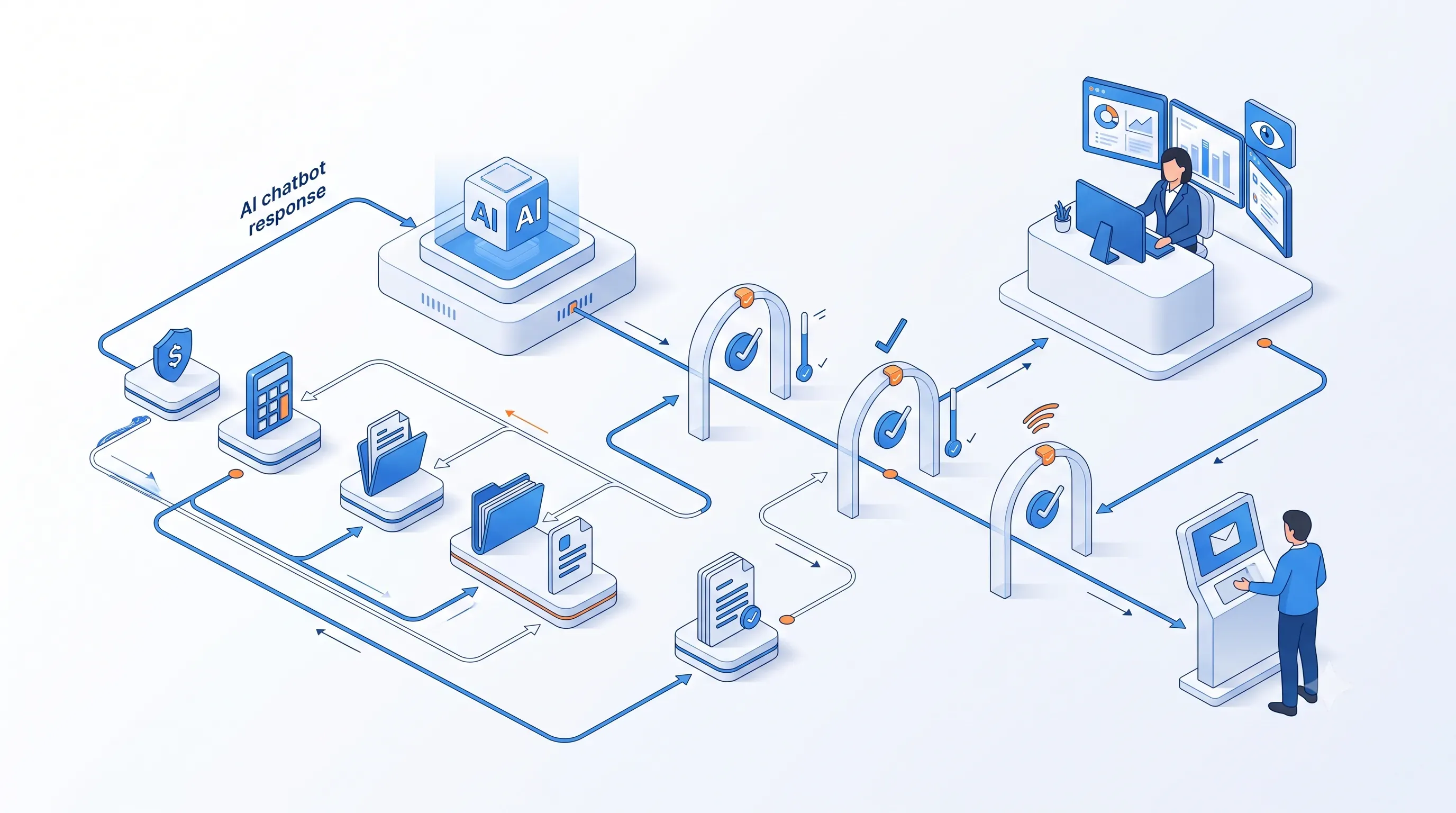
When an AI chatbot gives a wrong price or policy, do not begin with a “stronger prompt.” The cause may be an obsolete source, conflicting documents, broken table parsing, incorrect retrieval, unsupported inference or stale cache.
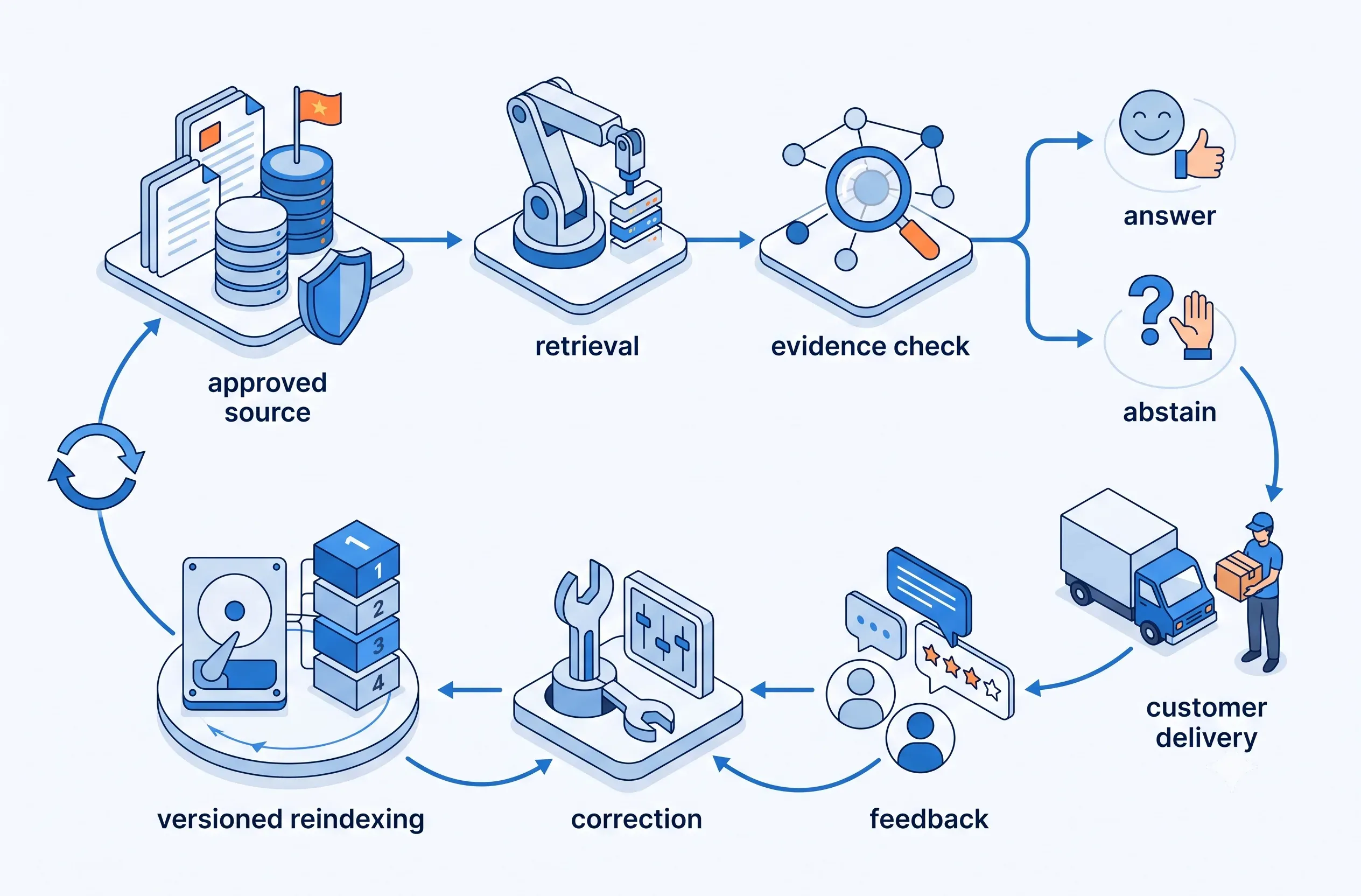
Build a control chain from authority → version → ingestion → retrieval → evidence gate → answer or abstain → monitoring → correction and retest. For prices, promotions and contractual conditions, answer only from valid evidence with sufficient context. Otherwise clarify, disclose the limitation or hand off. Fluent wording is not evidence of correctness.
Quick decision
Fix the layer where the error occurred
Prompts cannot replace knowledge governance and system testing.
Criteria
Four layers where wrong prices start
Do not choose from one feature or one number alone.
Source
Old prices, drafts, locale drift or multiple documents treated as authoritative.
Ingestion
Lost table columns, wrong units or chunks separating conditions from price.
Retrieval
Results for the wrong product, property, customer group or effective date.
Generation
Unsupported inference, source mixing or omitted conditions and disclaimers.
Analysis
Diagnose with traces, not guesses
Retain question, retrieved evidence, versions and output to reproduce the failure.
Inspect the source
Open the exact version used and verify price, currency, tax, conditions, validity and locale.
Inspect extraction
Compare parsed content with the original, especially tables, footnotes and merged rows.
Inspect retrieval
Review top-k, scores, filters and chunks. Filter by product, tenant, locale, approved status and validity.
Inspect generation
If evidence is correct, tighten grounded instructions, structure and validation. Prefer authoritative APIs or records over prose retrieval for structured dynamic data.
Implementation
A seven-step control loop for sensitive answers
Treat pricing updates like production changes.
Roadmap
Seven steps to control price and policy content
Every step needs a clear output and accountable owner.
1. Name the authority
One authoritative source for each price or policy type.
2. Add metadata
Tenant, product, locale, version, validity and approval state.
3. Separate dynamic data
Use APIs for live prices and RAG for explanatory policy.
4. Add an evidence gate
Clarify, abstain or hand off when evidence is insufficient.
5. Regression test
Cover normal, boundary, expired, conflicting and adversarial cases.
6. Canary content
Release controlled changes and monitor errors.
7. Correct safely
Retire bad versions, re-index, purge cache and verify again.
Controls
Guardrails around prices and policies
Reduce both error probability and impact.
- Do not let the model calculate final price without complete rules and inputs.
- Require source or record IDs for sensitive answers.
- Distinguish an estimate from a binding quotation.
- Expire and exclude obsolete content automatically.
- Alert on conflicting evidence for the same intent.
- Provide a topic kill switch to force handoff.
- Track grounded rate, severity and correction time.
OWASP highlights misinformation, injection and poisoning. NIST emphasizes lifecycle measurement and risk management, making correction an operating capability rather than an ad hoc task.
FAQ
Questions after an incorrect chatbot answer
Your response process determines customer impact.
Should the whole chatbot be disabled?
Only if the affected scope cannot be isolated. A topic kill switch can route pricing and policy to people.
Will increasing top-k fix it?
Not necessarily. It may add conflicting sources; evaluate retrieval and filters.
Can a prompt guarantee correctness?
No. Prompts cannot repair bad sources, parsing failures or stale APIs.
Should prices use RAG or an API?
Use authoritative APIs for dynamic price and stock; use RAG for policy explanation.
What follows a source correction?
Re-index, purge relevant cache, run regression tests and inspect production traces.
Conclusion
Answer quality starts before the model
Authority, retrieval and correction matter more than prompt wording.
Manage prices and policies like production data with owners, versions, validity, tests and rollback. The chatbot is the final presentation layer.
The objective is not a promise of zero errors. It is to block unsupported answers, detect failures early, contain impact and correct them with evidence.
FlowNexa
Review AI chatbot quality controls
FlowNexa can assess sources, retrieval, regression tests and abstention or handoff behavior.
Audit knowledge
Find conflicts, expiry and missing metadata.
Design quality gates
Set conditions before answers reach customers.
