


Does a Higher Top-K Make AI Answers More Accurate?
A higher Top-K can improve retrieval recall but also add noise to the context. Learn how to tune Top-K with reranking, thresholds, and RAG evaluation.


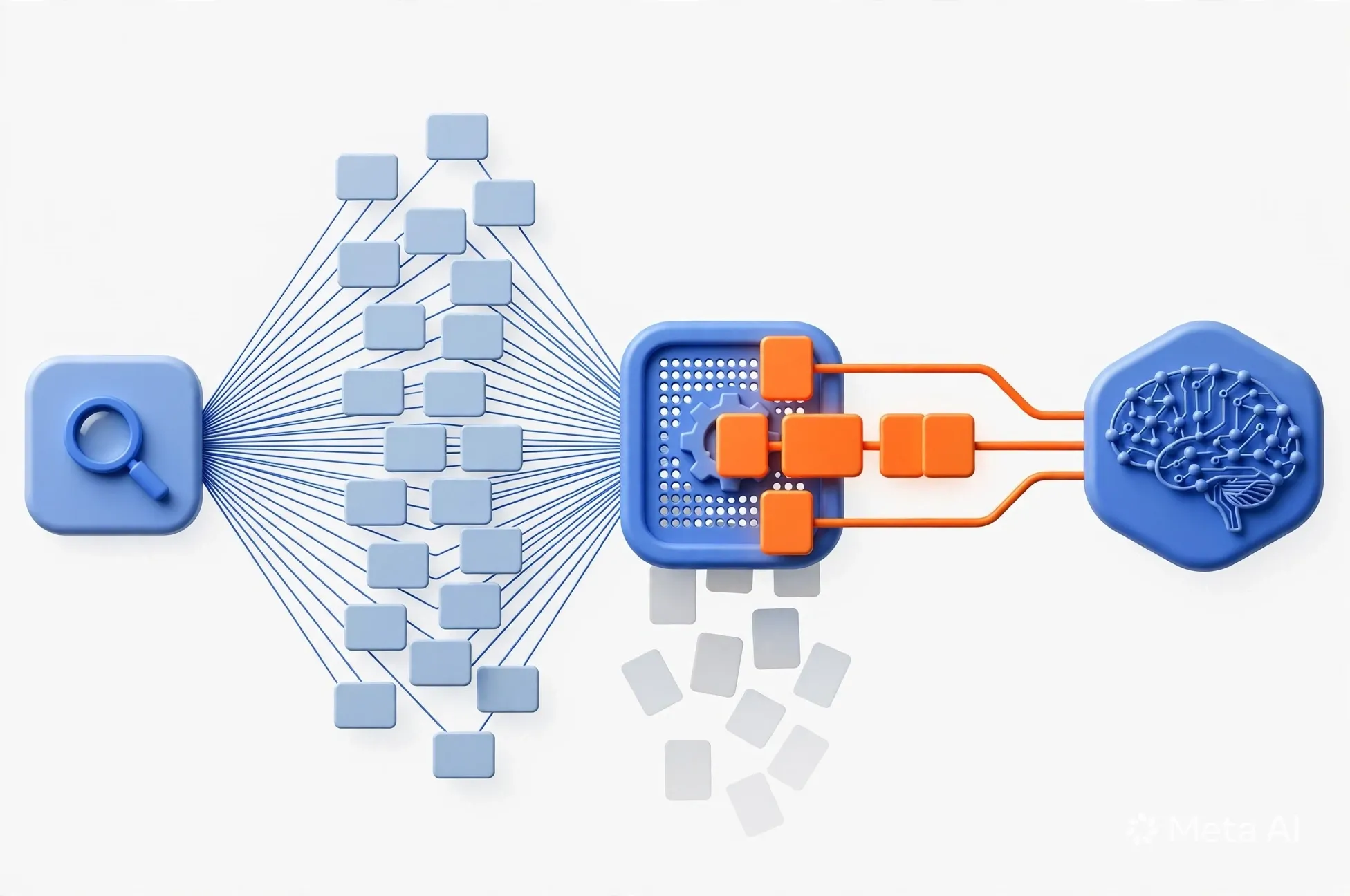
No. In RAG, increasing Top-K does not automatically make AI answers more accurate. A larger K gives retrieval more candidates and can reduce the chance of missing a relevant document. But if the additional results are weak, they also lengthen the context, add noise, consume tokens, and can lead the model toward less relevant evidence.
The useful question is therefore not "What K is universally best?" but "Which K gives this workload enough evidence without diluting the context?" In production, treat the candidate count used during retrieval separately from the number of chunks ultimately sent to the LLM, then tune both with evaluation rather than intuition.
Foundation
What does Top-K actually control in RAG?
K is the number of retrieval results requested at a stage, not a direct measure of answer accuracy.
In vector search, a query is represented as a vector and the system looks for nearby document vectors. Top-K commonly controls how many of the closest results are returned. With hybrid search, keyword and vector results can also be fused, ranked, and reranked before the application chooses grounding context for the LLM.
That creates an important distinction. Retrieval K controls the breadth of the candidate set. is the number of chunks that actually enter the prompt after filtering or reranking. If both are tied to one value, increasing K can accidentally turn "search more broadly" into "send more text to the model". Those are different decisions.