

What Are SPF, DKIM and DMARC? Why Does Business Email Still Go to Spam?
Understand email authentication and alignment, inventory every sender and roll out DMARC from monitoring to enforcement.
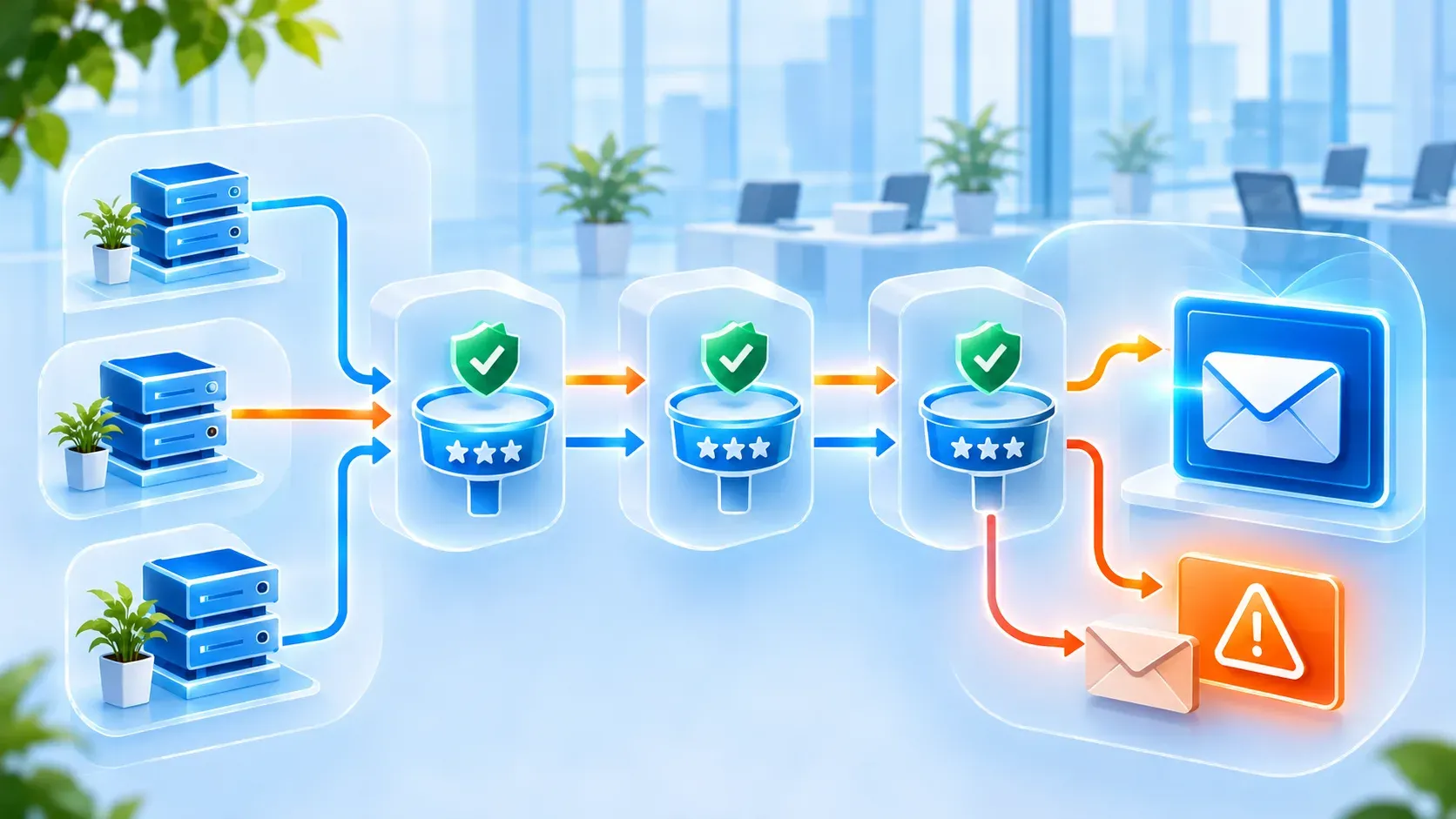
Having SPF does not guarantee inbox placement. Receiving systems also consider DKIM, DMARC alignment, sender reputation, content, recipient behavior and other signals. Authentication proves source and spoofing policy; it is not an inbox guarantee.
A common failure is adding the primary mail service to SPF while forgetting CRM, websites, marketing tools, scanners or transactional systems that send for the domain.
Practical guidance
How the three standards work together
Adapt to business scope, risk and operating capacity.
SPF authorizes sending infrastructure for the envelope domain. DKIM signs message elements with a domain. DMARC requires SPF or DKIM to pass and align with the visible From domain, while publishing policy and reporting addresses.
SPF can pass while DMARC fails because domains do not align. Forwarding may break SPF while an intact DKIM signature continues to validate.

Practical guidance
Inventory every sender before enforcement
Adapt to business scope, risk and operating capacity.
List Microsoft 365, CRM, marketing, website, helpdesk, invoicing, ERP, devices and vendors that send mail. Record envelope domain, DKIM domain, IP/include, owner and volume.
Do not create multiple SPF TXT records for one domain and monitor DNS lookup limits. Prefer third-party DKIM signing with your custom domain when supported.
Practical guidance
Roll out DMARC with observation
Adapt to business scope, risk and operating capacity.
Begin with monitoring, collect aggregate reports and classify legitimate and unknown sources. Fix SPF/DKIM and alignment before progressively moving toward quarantine or reject.
Test headers, message trace and special flows after changes. Maintain DNS rollback and ownership; do not jump to reject before inventory is complete.
Practical guidance
Frequently asked questions
Questions to clarify before implementation.
Is SPF pass enough?
No. DKIM, DMARC alignment and sender operations still matter.
Can DMARC reject block legitimate mail?
Yes, when legitimate senders are not configured; observe and phase enforcement.
Should platforms use separate sending domains?
Purpose-specific subdomains can separate reputation and policy when governed.
FlowNexa
Review the complete sending path
FlowNexa reviews DNS, senders, alignment and DMARC rollout before enforcement increases.
Review email authentication
[Contact FlowNexa](https://flownexa.ai/en/contact)
