



What Is a Hotel PMS, and Does a Small Hotel Really Need One?
A hotel PMS manages reservations, check-in, room status, housekeeping, operational finance and reporting—but does a small property need one now?

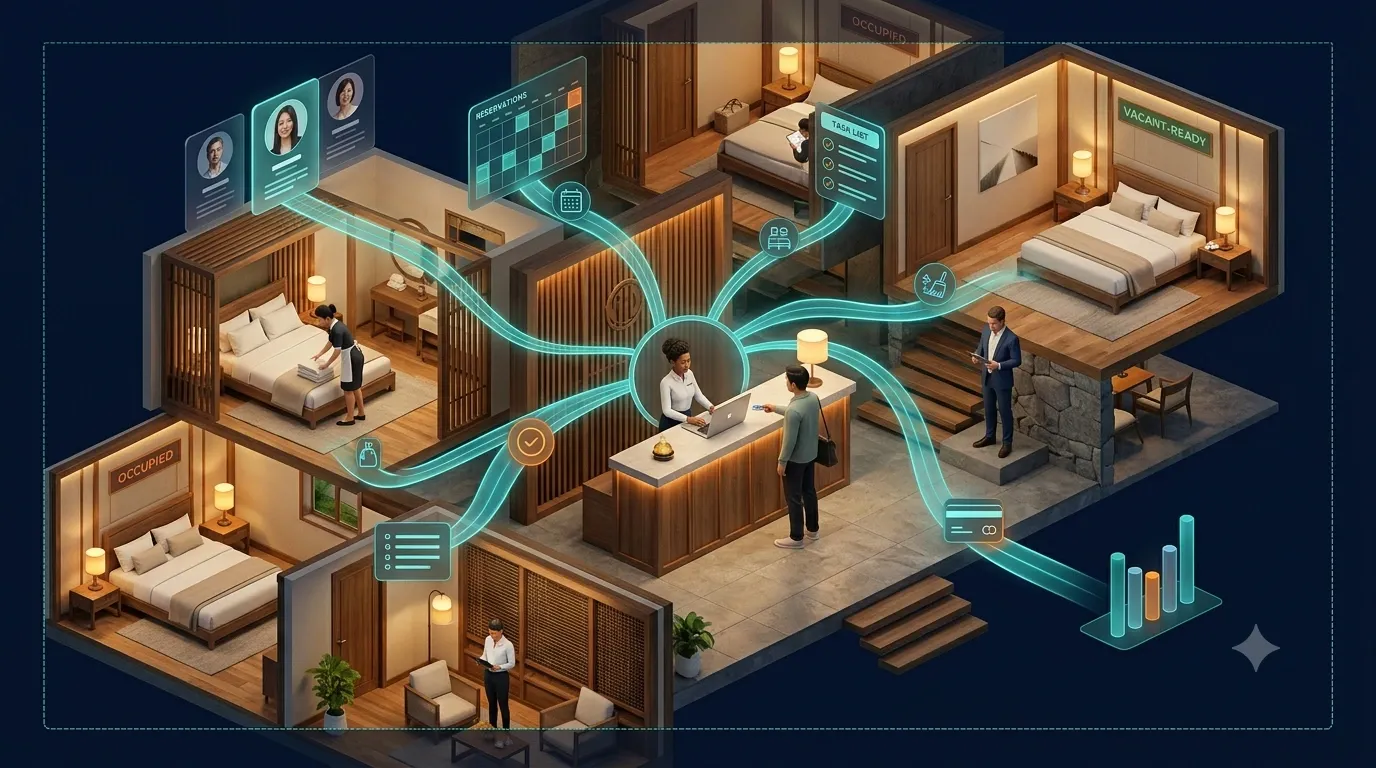
A 12-room hotel can begin with a notebook, a spreadsheet, messaging apps and the manager's memory. When one person handles reservations and checks every room, that may be enough. Complexity appears when bookings arrive from several sources, staff change shifts, a guest asks for early check-in, a room is not yet clean and the owner wants today's revenue immediately. A wrong spreadsheet cell can become an overbooking, an unpaid balance or a poor guest experience.
The short answer: a PMS is the core operating system for an accommodation business. A small hotel may not need a complex PMS on day one, but it needs a centralized source of truth when several people, shifts and workflows depend on room and reservation status. Room count alone is a weak decision rule. A 10-room property selling through several channels may need a PMS before a 20-room property with a simple operating model.
A PMS is more than a reservation calendar
A useful PMS helps the team answer consistently: who is arriving, which rooms are ready, who is staying, what remains unpaid and what action is required next.
Definition