

One Chatbot for Multiple Branches: Route Leads to the Right Owner
Collect only enough location, need and contact context to route enquiries by branch, product or region without making visitors repeat themselves.
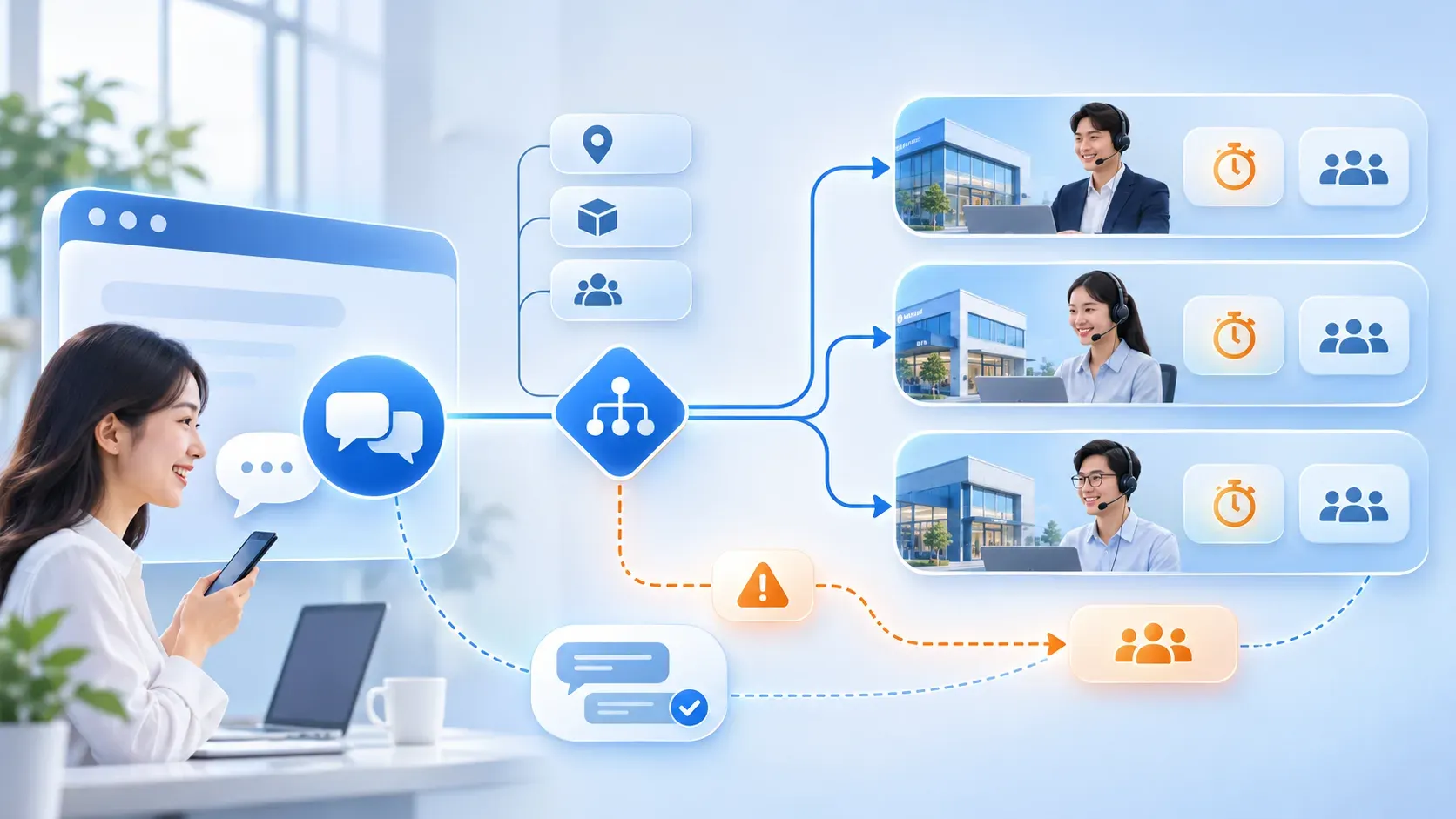
One shared chatbot can create a consistent experience, but poor routing leaves enquiries in unattended inboxes or forces customers to repeat information. The system needs the right routing signals and a fallback for missing data or unavailable owners.
Routing should use customer-confirmed data and transparent business rules. A model should not infer branch, budget or urgency from writing style.
Practical guidance
Define minimum routing keys
Adapt to business scope, risk and operating capacity.
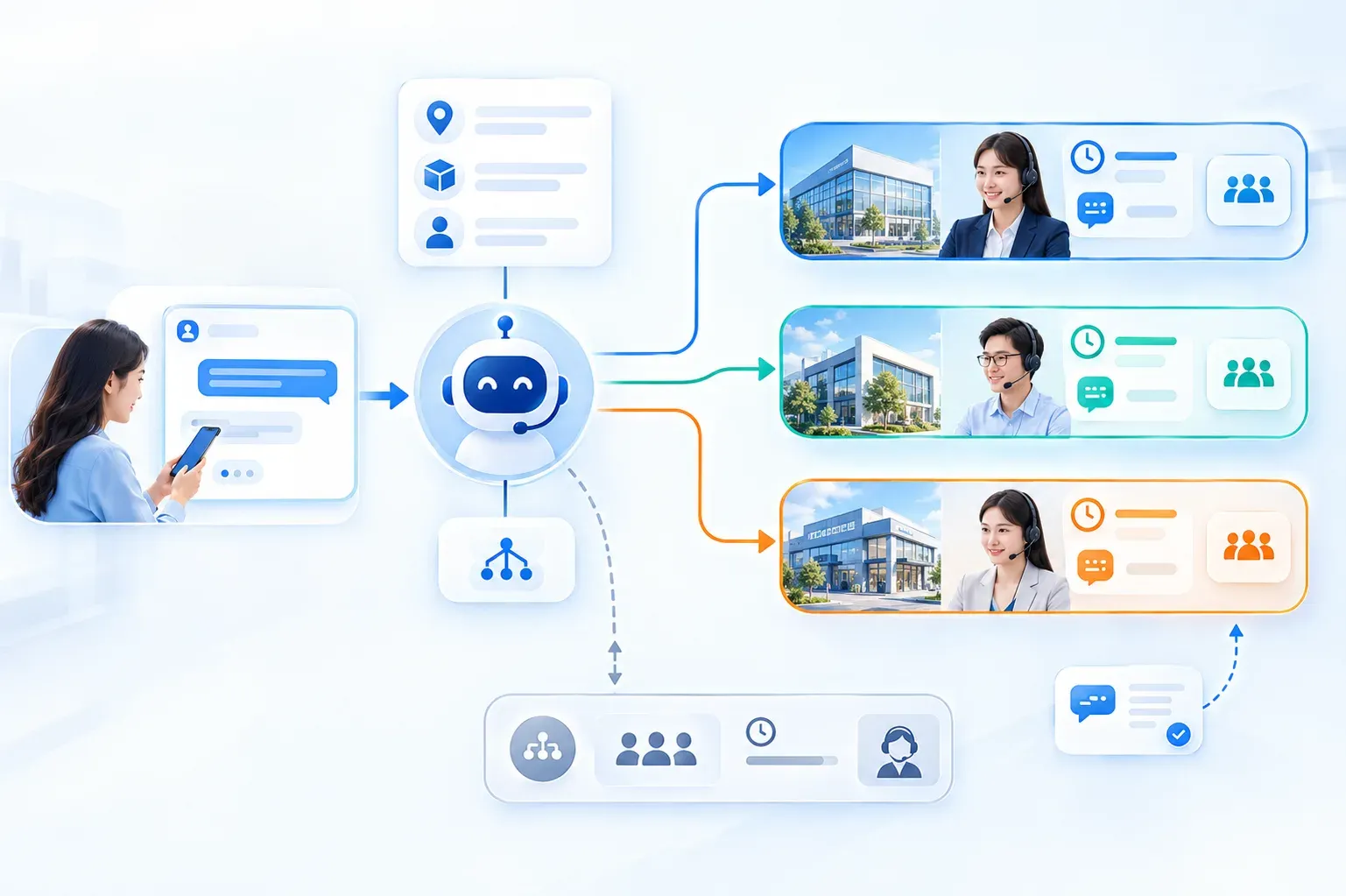
Use only fields that truly change ownership: region, preferred branch, product group, language or request type. Do not ask all fields when one is enough.
Normalize to internal codes while retaining the visitor's own statement. If the visitor does not know the branch, route by service address or a central queue.
Practical guidance
Separate decision from delivery
Adapt to business scope, risk and operating capacity.
Validation checks required fields and consent. A versioned rules table selects owner or queue. Delivery must be idempotent so retries do not create duplicate leads.
Every route needs service expectations, working hours, backup ownership and escalation. On CRM or email failure, queue safely and provide an alternate contact rather than false success.
Practical guidance
Carry context through handoff
Adapt to business scope, risk and operating capacity.
Send the need, confirmed customer data, source references and transcript or summary with unverified fields marked. Staff should see why the lead was assigned.
Track routing accuracy, acceptance time, reassignment and reasons. When the branch model changes, update rules and regression-test before release.
Practical guidance
Frequently asked questions
Questions to clarify before implementation.
Should AI select the branch autonomously?
AI may assist classification, but routing needs rules, confidence and fallback.
What if no branch is selected?
Use service region or a central queue for human confirmation.
How are duplicate retry leads prevented?
Use identity and idempotency keys with controlled upsert or existence checks.
FlowNexa
Design routing around a real journey
FlowNexa can model branches, queues, fallback and handoff data for the current process.
Discuss the workflow
[Contact FlowNexa](https://flownexa.ai/en/contact)
